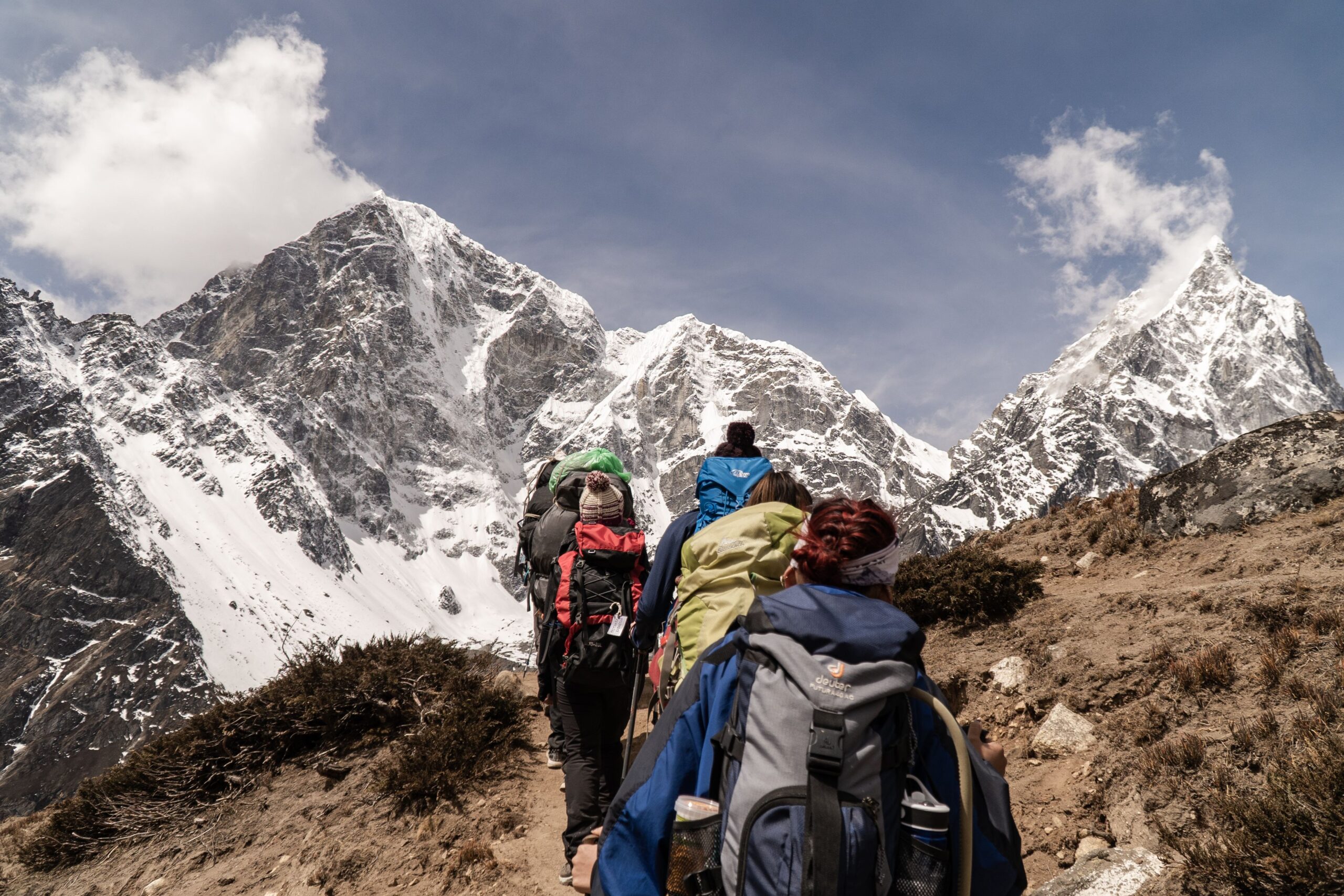
What a Nepal Trekking Guide Has Learned From Hikers in Their 60s, 70s and 80s
From becoming a porter at 15 to guiding people through the Himalayas, one young Nepalese trekking guide has learned that age doesn’t necessarily determine who belongs in the mountains.
Growing up in a village in Nepal, the mountains were always there.
In the distance were enormous snow-covered peaks. Like many people who grow up surrounded by something extraordinary, though, seeing them from home was very different from actually experiencing them.
That changed when he was 15.
He had just finished his 10th class and had a school holiday ahead of him. While many of his friends signed up for computer classes and bridge courses, he decided he wanted to do something completely different.
He wanted to see the mountains.
His uncle worked as a trekking guide, so he went to his office and asked if he could come along.
But he didn’t simply want to join a trek.
He wanted to work as a porter.
After some discussion, his uncle agreed.
That decision would change the direction of his life.
Falling in Love With the Mountains
Everything about that first trek was new.
He remembers carrying a small phone and taking photographs of almost every corner of the journey.
But it wasn’t only the landscape that fascinated him.
He began meeting travellers who had come from countries all over the world specifically to experience Nepal.
It made him think about something surprisingly simple.
If people were willing to travel halfway around the world to see Nepal’s mountains, why shouldn’t he explore his own country too?
That first experience developed into a love of trekking and eventually a career as a guide.
And over the years, the people he has encountered on the trail have challenged some of the assumptions we make about getting older.
The Hikers Who Changed His View of Age
Despite being only 23 himself, he has guided and met trekkers in their 60s, 70s and even 80s.
One encounter during a trek around Manaslu particularly stuck with him.
He met a man in his 80s who had completed more than 30 treks in Nepal.
His jacket was covered with logos representing the treks he had completed over the years.
For a young guide who spends his life around the mountains, even that was impressive.
It reinforced something he had seen repeatedly on the trail:
Age doesn’t automatically mean the end of adventure.
He is careful not to pretend he knows what it feels like to be an older trekker himself.
“I’m only 23, so this is something I speak about from what I’ve seen rather than from experience!”
But what he has seen is plenty of older people continuing to enjoy demanding outdoor adventures.
His advice is simple: don’t automatically decide you’re too old before you’ve even tried.
Consistency Beats Intensity
Years in the mountains have also taught him that staying active isn’t necessarily about pushing harder.
His philosophy is:
Consistency beats intensity.
For older hikers in particular, he recommends taking care on descents, keeping backpacks light and recognising that rest isn’t a failure — it’s part of trekking.
“The goal may change, but the trail doesn’t.”
You might move more slowly than you once did. Your destination might change. You might need additional recovery.
That doesn’t necessarily mean you have to stop.
The Mistakes He Sees Trekkers Make
Many problems in the mountains begin before the trek itself.
Some of the most common mistakes he sees are surprisingly avoidable:
Overpacking. Not training beforehand. Walking too quickly. Ignoring hydration. Not allowing enough time to acclimatise. And arriving with brand-new boots that have never been properly worn in.
But there’s another mistake he believes is particularly important.
Having all the equipment — but no contingency plan.
Conditions in the mountains can change quickly. Good equipment matters, but so does being prepared to change the plan.
He learned that lesson dramatically on the Manaslu Circuit.
The Day the Trail Disappeared
About a year and a half ago, he was guiding two guests from Argentina.
They reached Dharmasala at approximately 4,700 metres, preparing to cross the 5,100-metre Larkey Pass the following morning.
Normally, trekkers would begin the crossing around 3:30 or 4:00 in the morning.
But the weather had deteriorated.
Heavy snow and extreme cold made the planned departure unsafe, so they waited.
Eventually the snow stopped. Other groups began moving and they decided to continue too.
About an hour and a half later, everything changed again.
Another snowstorm arrived.
The wind strengthened. Snow covered the route. The trail effectively disappeared beneath them.
A crossing that would normally take around six or seven hours took almost 10 hours.
It became one of the experiences that shaped how he approaches the mountains.
His lesson from that day wasn’t about being tougher.
It was about knowing when not to push.
“Don’t rush just because everyone else is going. Look at the conditions, make your own decision, and accept that sometimes the mountain and life needs you to slow down.”
What the Mountains Teach You
Ask him what trekking has taught him about life and two words come up:
Patience and resilience.
Things don’t always go according to plan.
Sometimes you have to wait.
Sometimes you have to change direction.
And sometimes the smartest decision is to slow down while everyone else keeps moving.
After beginning as a 15-year-old porter simply wanting to see the mountains he’d grown up looking at, he now spends his time helping other people experience them.
Some of those people are several times his age.
And perhaps that’s one of the more interesting lessons from his story.
The mountains don’t ask how old you are.
They demand preparation, patience, respect and an understanding of your own limits.
But there can still be another trail ahead.
A note from The Good Years Club
Thinking about getting into hiking later in life? Start with walks appropriate to your current fitness and health, build gradually, and seek appropriate professional advice before attempting demanding or high-altitude trekking.
Your best years are still happening.