The Best Low Maintenance Garden Ideas for Seniors A Complete Guide
One of the great pleasures of retirement is having time to enjoy a garden — but the physical demands of traditional gardening can make it increasingly challenging as we get older. The good news is that a beautiful, thriving garden doesn’t require hours of back-breaking work. With the right plants, the right design choices, and a few smart strategies, you can create a garden that’s genuinely enjoyable to tend without the physical strain. Here are the best low maintenance garden ideas for seniors.
Why Low Maintenance Gardening Makes Sense After 60
Traditional gardening can be genuinely rewarding — but it can also be genuinely hard on the body. Bending, kneeling, digging, heavy lifting, and constant weeding take a real toll on backs, knees, hips, and hands over time.
Low maintenance gardening isn’t about giving up on the garden. It’s about working smarter — choosing plants, designs, and approaches that deliver maximum beauty and enjoyment for minimum physical effort.
As I wrote in the mental health benefits of gardening after 60 — the therapeutic value of time spent in the garden is one of the most underappreciated tools available for wellbeing in retirement. A low maintenance approach makes those benefits sustainable long term, rather than something that has to be abandoned because the physical demands become too great.
Design Principles for a Low Maintenance Garden
Before looking at specific plants and features, a few design principles make an enormous difference to how much ongoing work a garden requires.
Reduce lawn area Lawn is one of the highest maintenance elements in any garden — requiring regular mowing, edging, fertilising, and watering. Replacing areas of lawn with mulched garden beds, paving, or ground cover plants significantly reduces the ongoing maintenance burden.
Mulch generously A thick layer of mulch — 7-10cm — over garden beds is one of the single most effective low maintenance strategies available. Mulch suppresses weeds, retains moisture, regulates soil temperature, and improves soil health over time. Less weeding, less watering, healthier plants — all from one simple step.
Design for accessibility Wide, clear paths with stable surfaces — pavers, compacted gravel, or concrete — make moving through the garden easier and safer. Curved or irregular edges that are difficult to mow or edge are worth replacing with clean, simple lines that require less precision maintenance.
Group plants with similar water needs Placing plants with similar watering requirements together allows you to water efficiently rather than attending to individual plants scattered across the garden — reducing both the time and water required.
Choose perennials over annuals where possible Perennials come back year after year without replanting — significantly reducing the seasonal planting work that annual-focused gardens require.
The Best Low Maintenance Plants for Australian Seniors
Native Australian Plants
Australian natives are genuinely the best choice for a low maintenance garden in most parts of the country — evolved to thrive in Australian conditions with minimal intervention.
Grevilleas One of the most reliable and rewarding native plants available — grevilleas come in an extraordinary range of sizes, from compact ground covers to large flowering shrubs, and produce beautiful flowers that attract native birds year-round. Once established, most grevilleas need minimal watering and no fertilising.
Kangaroo Paw A striking and uniquely Australian plant that produces extraordinary tubular flowers in a range of colours — and requires very little ongoing maintenance once established. Excellent for cut flowers too.
Westringia (Native Rosemary) A tough, attractive shrub that tolerates a wide range of conditions — drought, coastal salt spray, and poor soils — while producing pretty white or lilac flowers through much of the year. Very similar in appearance to traditional rosemary but significantly tougher in Australian conditions.
Lomandra One of the most versatile and reliable native ground covers available — lomandra forms attractive grass-like clumps that require almost no maintenance, resist drought, and look good year-round. Excellent for filling large garden bed areas with minimal ongoing attention.
Callistemon (Bottlebrush) A classic Australian native that produces spectacular red, pink, or white brush flowers beloved by native birds — and requires virtually no maintenance beyond an occasional trim after flowering.
Low Maintenance Exotic Plants That Suit Australian Gardens
Agapanthus One of the most reliable and forgiving plants available for Australian gardens — agapanthus produces beautiful blue or white flower heads through summer, spreads slowly to fill gaps, and requires almost no attention once established. Very drought tolerant once established.
Lavender A beautiful, fragrant, and genuinely tough plant that thrives in Australian conditions with minimal water and no fertilising — producing flowers that are beautiful in the garden and useful cut for the house. Trim lightly after flowering to keep plants compact and productive.
Rosemary A dual-purpose plant that’s both ornamental and useful in the kitchen — rosemary is extremely drought tolerant, requires no fertilising, and provides year-round structure and fragrance. Low trimming once or twice a year is all it needs.
Ornamental Grasses Low maintenance, architectural, and beautiful in all seasons — ornamental grasses like Miscanthus, Pennisetum, and Festuca provide movement and texture in the garden with virtually no ongoing care beyond an annual cut back.
Succulents Perhaps the ultimate low maintenance plant — succulents store water in their leaves, require almost no watering once established, and come in an extraordinary range of shapes, sizes, and colours. Perfect for pots, rockeries, and dry garden areas.
Practical Low Maintenance Garden Features
Raised Garden Beds
As I wrote in the best raised garden beds for seniors — raised beds bring the garden up to you rather than forcing you down to the garden, dramatically reducing the bending and kneeling that makes traditional garden beds increasingly difficult.
A raised bed at the right height — 60-90cm for most seniors — allows comfortable gardening from a standing or seated position, with significantly less physical strain than in-ground gardening.
Drip Irrigation or Soaker Hoses
Installing a simple drip irrigation system or soaker hose network removes the daily watering task entirely — or at least reduces it to checking the system rather than physically watering the garden.
The practical benefits:
- Consistent, efficient watering without daily effort
- Water delivered directly to roots — reducing evaporation and water waste
- Compatible with a timer — can be set to water automatically while you’re away
- Significantly reduces the physical effort of garden maintenance
A basic drip irrigation setup is one of the best investments a senior gardener can make — and modern systems are surprisingly affordable and easy to install.
Weed Mat and Mulch
The combination of weed mat underneath and a thick layer of mulch on top is the most effective weed suppression strategy available — dramatically reducing one of the most labour-intensive aspects of garden maintenance.
How to apply:
- Lay weed mat over prepared garden beds before planting
- Cut holes for plants
- Cover with 7-10cm of mulch — bark chip, sugar cane, or pea straw all work well
- Refresh the mulch layer annually as it breaks down
Paving and Hard Landscaping
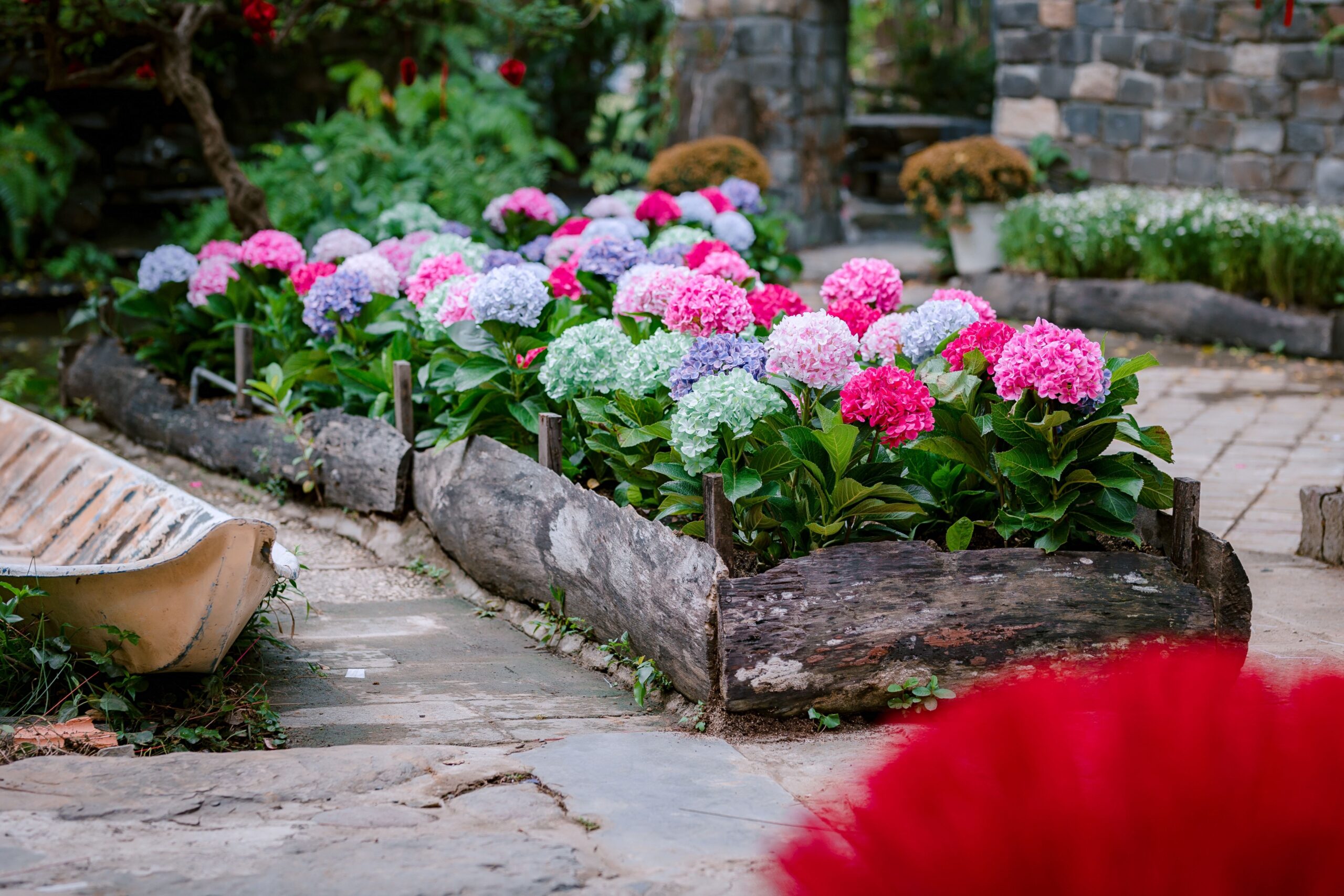
Replacing high-maintenance garden areas with pavers, gravel, or compacted crushed rock significantly reduces the ongoing maintenance burden while creating attractive, functional outdoor living spaces.
Low maintenance hard landscaping ideas:
- A simple paved patio or entertaining area under a pergola or shade sail
- Gravel or pebble paths between garden beds
- A small water feature — modern pump-driven water features require minimal maintenance and add beautiful sound and movement to the garden
- Raised timber or composite decking for outdoor sitting areas
Vertical Gardens and Wall Planters
Vertical gardens and wall-mounted planters bring plants up to a comfortable working height while using minimal ground space — ideal for smaller gardens, balconies, and courtyard spaces.
What to grow vertically:
- Herbs — basil, parsley, chives, and mint all grow well in vertical planters
- Strawberries — surprisingly productive in vertical systems and easy to harvest
- Lettuce and salad greens — fast growing and perfect for small vertical spaces
- Succulents — beautiful in vertical frames with minimal watering required
Container Gardening
Growing plants in pots and containers rather than in-ground beds offers several significant advantages for senior gardeners — mobility (pots can be moved to better light or shade as needed), height (pots on stands or benches bring plants to a comfortable working level), and manageability (smaller, contained growing spaces are easier to tend).
What to grow in containers:
- Herbs — a collection of herb pots near the kitchen door is endlessly practical
- Citrus trees — dwarf varieties perform beautifully in large containers
- Tomatoes and chillies — productive and rewarding in large pots with regular watering
- Flowers — geraniums, petunias, and impatiens all thrive in containers
Container gardening tips for seniors:
- Use lightweight plastic or fibreglass pots rather than heavy terracotta — much easier to move
- Self-watering pots with built-in reservoirs significantly reduce watering frequency
- Pot feet or stands raise containers to a comfortable working height and improve drainage
Tools That Make Low Maintenance Gardening Easier
The right tools make a genuine difference to how physically demanding gardening is — and there are some genuinely excellent options designed specifically for senior gardeners.
Long-handled tools Long-handled versions of standard garden tools — hoes, rakes, cultivators, and weeders — dramatically reduce the need to bend and reach. Look for lightweight aluminium or fibreglass handles with comfortable grip surfaces.
Kneeling pads and garden stools For tasks that do require being close to the ground, a quality kneeling pad or garden stool provides comfort and stability — and a good kneeler with handles makes getting up and down significantly safer and easier.
Ergonomic hand tools Hand tools with thick, cushioned, ergonomic grips are significantly easier on arthritic hands than standard thin-handled tools. Look for tools specifically marketed for arthritis or reduced grip strength.
Battery-powered garden tools Battery-powered pruners, hedge trimmers, and lawn mowers are significantly lighter and easier to handle than their petrol counterparts — and modern battery technology means they’re more than capable for most garden tasks.
A good garden cart or wheelbarrow A lightweight garden cart with two wheels for stability is significantly easier to manage than a traditional single-wheel barrow — particularly for carrying heavier loads of soil, mulch, or garden waste.
Seasonal Low Maintenance Garden Calendar for Australian Seniors
A simple seasonal approach keeps the garden looking good year-round without requiring constant attention.
Autumn (March-May):
- Apply fresh mulch to all garden beds
- Plant new perennials and natives — the ideal time for establishing new plants before winter
- Prune any summer-flowering shrubs that have finished
- Plant winter vegetables if you have a vegetable garden
Winter (June-August):
- The lowest maintenance season for most Australian gardens
- Water less frequently — most plants need minimal watering in winter
- A good time for planning and designing any garden changes
- Plant bare-rooted roses and fruit trees
Spring (September-November):
- The most active season — check irrigation systems are working before temperatures rise
- Apply a slow-release fertiliser to garden beds
- Prune winter-flowering plants that have finished
- A good time to add new plants before summer heat arrives
Summer (December-February):
- Focus on keeping plants watered — mulch is doing its most important work now
- Harvest any summer produce regularly
- Avoid heavy garden work during the heat of the day — early morning or late afternoon only
- Check irrigation systems are delivering adequate water during heat waves
The Bottom Line
A low maintenance garden isn’t a compromise — it’s a smarter approach that delivers all the beauty, enjoyment, and therapeutic benefits of gardening without the physical demands that can make traditional gardening increasingly difficult after 60.
Choose the right plants, use mulch generously, consider raised beds and irrigation, and design for accessibility — and you’ll have a garden that’s genuinely enjoyable to spend time in without the back pain and exhaustion that sometimes takes the joy out of it.
The garden should be a source of pleasure in retirement, not a source of pain. A low maintenance approach makes sure it stays that way.
What’s your best low maintenance garden tip? Share it in The Good Years Club community — we’d love to hear what’s worked for you 💙
👉 Join The Good Years Club Community — https://www.facebook.com/share/g/1Fw4FHNpJr/