Why Muscle Mass Is Important in Your 60s — And How to Keep It
Most Australians over 60 think about heart health, bone density, and brain function when it comes to healthy ageing. But there’s one factor that underpins all of these — and it doesn’t get nearly enough attention. Muscle mass. The gradual loss of muscle that begins in your 30s and accelerates after 60 is one of the most significant drivers of poor health, reduced independence, and early death in older adults. The good news is it’s largely preventable — and even reversible. Here’s everything you need to know.
What Is Sarcopenia?
The medical term for age related muscle loss is sarcopenia — from the Greek words for flesh and loss. It’s a condition that affects virtually every older adult to some degree and its consequences are far reaching.
From the age of 30 the average person loses between 3 and 5 percent of their muscle mass per decade. After 60 this process accelerates significantly. By the time most Australians reach their 70s they may have lost 30 percent or more of the muscle mass they had in their prime.
The consequences of this loss go far beyond simply feeling weaker.
Why Muscle Mass Matters More Than Most People Realise
1. Muscle protects your bones Muscle and bone work together as a system. Strong muscles pull on bones during exercise — stimulating bone density and reducing the risk of osteoporosis. People with greater muscle mass consistently have stronger bones and lower fracture risk.
2. Muscle controls your blood sugar Muscle tissue is the body’s primary site for glucose uptake. More muscle means better blood sugar regulation and significantly lower risk of type 2 diabetes — one of the most common and costly chronic diseases in older Australians.
3. Muscle protects your heart Research consistently shows that people with greater muscle mass have lower rates of cardiovascular disease, lower blood pressure, and better cholesterol profiles. Muscle is metabolically active tissue that supports heart health in multiple ways.
4. Muscle keeps you upright and prevents falls Strong muscles — particularly in the legs, hips, and core — are your primary defence against falls. Fall related injuries are the leading cause of hospitalisation for Australians over 65. Maintaining muscle strength is one of the most powerful fall prevention strategies available.
5. Muscle supports your metabolism Muscle tissue burns more calories at rest than fat tissue. As muscle mass declines metabolism slows — making weight management increasingly difficult and contributing to the gradual weight gain many people experience after 60.
6. Muscle maintains your independence The ability to get up from a chair, climb stairs, carry groceries, and move through the world independently all depend on adequate muscle strength. Sarcopenia is one of the primary drivers of frailty and loss of independence in older adults.
The Warning Signs of Muscle Loss
Many people don’t notice muscle loss until it’s significantly advanced. Warning signs to watch for include:
- Difficulty getting up from a low chair without using your arms
- Struggling to climb stairs that previously felt easy
- Carrying shopping bags feels harder than it used to
- You feel generally weaker than you did a few years ago
- You’ve noticed your arms or legs look thinner
- You fall or nearly fall more frequently
- You feel fatigued after activities that previously felt easy
If any of these sound familiar it’s worth speaking with your GP and considering a targeted muscle building program.
How to Maintain and Build Muscle After 60
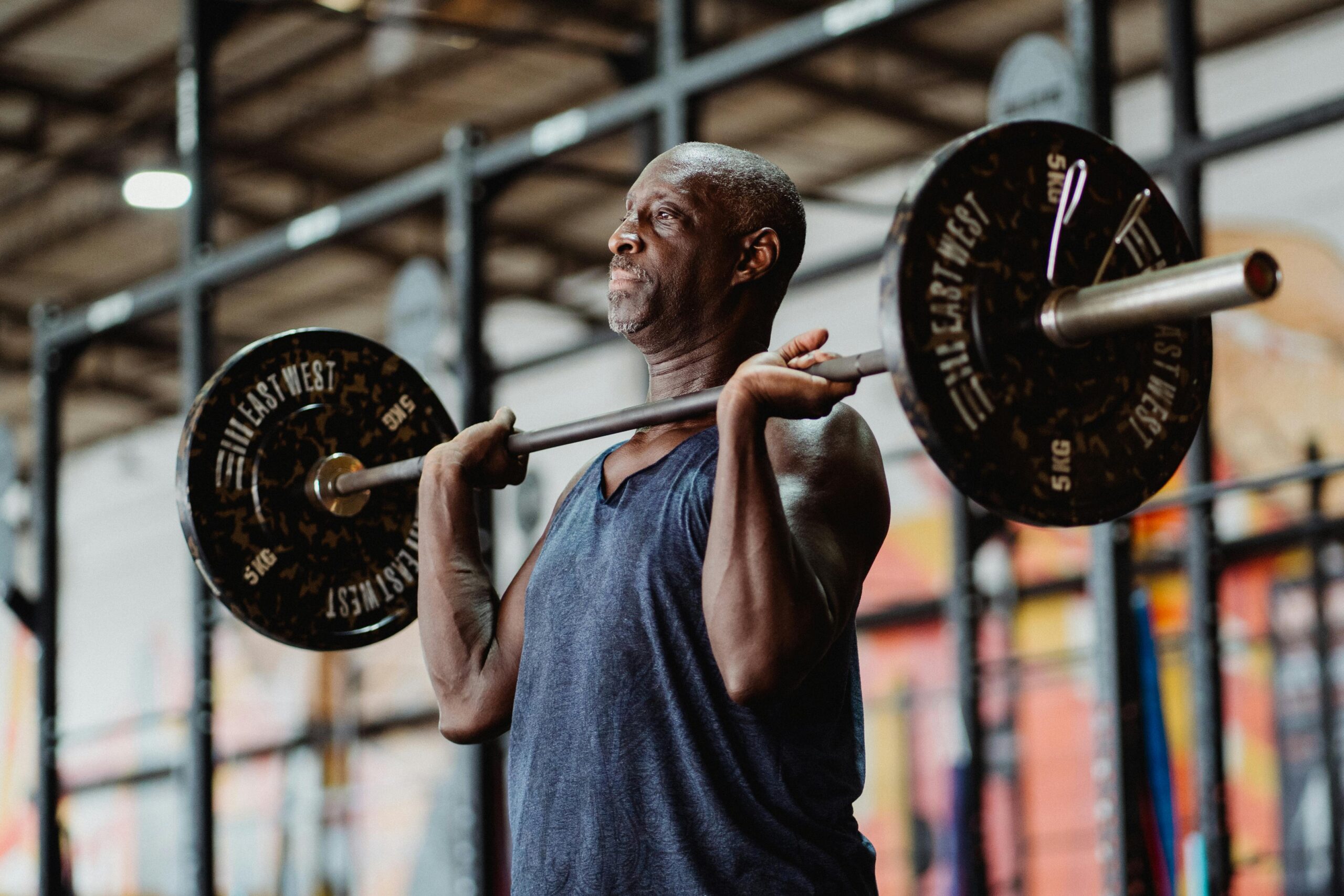
The most important thing to understand is that muscle responds to training at any age. Multiple studies have shown that people in their 70s, 80s, and even 90s can build meaningful muscle through resistance training. It’s never too late to start.
1. Resistance Training — The Most Important Thing You Can Do
Resistance training — also called strength training or weight training — is the most effective intervention for maintaining and building muscle at any age. It doesn’t require a gym or heavy weights. Resistance bands, bodyweight exercises, and light dumbbells are all highly effective. We recommend these resistance bands which are available on amazon and perfect for at home use.
Aim for at least two resistance training sessions per week targeting all major muscle groups — legs, back, chest, shoulders, and arms.
Beginner friendly exercises:
- Sit to stand from a chair — builds leg strength directly relevant to daily function
- Wall push ups — upper body strength without floor work
- Resistance band rows — back and arm strength
- Calf raises — lower leg strength and balance
- Glute bridges lying on your back — hip and core strength
2. Eat Enough Protein
Protein is the building block of muscle. Without adequate protein intake muscle building is significantly impaired regardless of how much exercise you do.
After 60 your body becomes less efficient at using dietary protein to build muscle — meaning you actually need more protein than younger adults, not less.
Aim for:
- 1.2 to 1.6 grams of protein per kilogram of body weight per day
- For a 70kg person that’s approximately 85 to 112 grams of protein daily
Best protein sources:
- Lean meat — chicken, turkey, lean beef
- Fish and seafood — particularly oily fish like salmon and sardines
- Eggs — one of the most complete and affordable protein sources available
- Dairy — Greek yoghurt, cottage cheese, milk
- Legumes — lentils, chickpeas, beans
- Protein supplements — whey or plant based protein powder if needed to meet daily targets
3. Don’t Skip Meals
Spreading protein intake across three meals rather than loading it into one is significantly more effective for muscle building. Aim for at least 25 to 30 grams of protein at each main meal.
4. Stay Active Every Day
Beyond structured exercise everyday activity — walking, gardening, housework, taking the stairs — all contribute to maintaining muscle function. The more you move throughout the day the better your muscle health.
5. Get Enough Sleep
Muscle repair and growth happens primarily during sleep. Chronic poor sleep significantly impairs muscle recovery and building. Prioritising seven to eight hours of quality sleep per night is an important part of any muscle building strategy.
6. Consider Creatine Supplementation
Creatine is one of the most extensively researched supplements available and has strong evidence for supporting muscle strength and mass in older adults. It’s safe, affordable, and available at most pharmacies and health food stores.
Speak with your GP before starting any new supplement.
7. Talk to Your GP or Physiotherapist
If you’re new to exercise or have existing health conditions a GP or physiotherapist can help you design a safe and effective program tailored to your specific needs and health status. Many physiotherapy programs are partially covered by Medicare under a Chronic Disease Management plan.
A Simple Weekly Muscle Building Plan for Beginners
You don’t need a gym or complicated equipment to start building muscle. Here’s a simple effective plan you can do entirely at home:
Monday — Lower Body
- Sit to stand — 3 sets of 10
- Calf raises — 3 sets of 15
- Glute bridges — 3 sets of 12
Wednesday — Upper Body
- Wall push ups — 3 sets of 10
- Resistance band rows — 3 sets of 12
- Resistance band bicep curls — 3 sets of 12
Friday — Full Body
- Sit to stand — 3 sets of 10
- Wall push ups — 3 sets of 10
- Resistance band rows — 3 sets of 12
- Calf raises — 3 sets of 15
Start with whatever feels manageable and gradually increase repetitions and resistance as you get stronger. Consistency over months and years is what produces results.
The Bottom Line
Muscle loss after 60 is real, significant, and has far reaching consequences for your health, independence, and quality of life. But it is not inevitable. Regular resistance training, adequate protein intake, and consistent daily activity can maintain and even build muscle at any age.
Starting today — even with the simplest exercises — puts you on a trajectory toward stronger, healthier, more independent ageing. Your muscles are waiting to respond. Give them the signal.
Found this helpful? Share it with someone who needs to hear it. And join The Good Years Club on Facebook for weekly tips on staying strong and active after 60.