The Best Way to Visit Melbourne. A Complete Guide for Australian Retirees.
⭐ FIND THE BEST DEALS IN MELBOURNE 👇
Compare thousands of Melbourne hotels on Trip.com and find the best price before you book.
Melbourne is Australia’s most liveable city and one of the world’s great urban destinations. A city of extraordinary food, world class arts and culture, beautiful parks, iconic laneways, and some of Australia’s most spectacular day trips right on its doorstep. Whether you are visiting Melbourne for the first time or returning to explore more deeply, this complete guide covers everything you need to know to make the most of your time in one of Australia’s most extraordinary cities.
Getting There
Flying: Flying is the most practical option for most Australians visiting Melbourne. Direct flights connect Melbourne Airport with Sydney, Brisbane, Perth, Adelaide, Hobart, Cairns, and most other major Australian cities. Qantas, Virgin Australia, and Jetstar all operate frequent services. Flight time from Sydney is approximately 1 hour 20 minutes. From Brisbane approximately 2 hours 30 minutes. From Perth approximately 3 hours 30 minutes.
Driving: Melbourne is within driving distance for visitors from Sydney, Adelaide, and regional Victoria. The drive from Sydney takes approximately 9 hours via the Hume Highway. From Adelaide approximately 8 hours via the Western Highway. Both routes pass through extraordinary Australian countryside and are worth doing at least once for the experience.
Train: The XPT overnight train from Sydney Central to Southern Cross Station in Melbourne is a genuinely enjoyable way to travel between the two cities. Departing Sydney in the evening and arriving in Melbourne the following morning, the overnight train is comfortable, affordable, and eliminates the need for a hotel night.
Where to Stay in Melbourne
Melbourne has distinct neighbourhoods each with its own character, and choosing the right area makes a significant difference to your experience of the city.
Melbourne CBD: The city centre is the best base for first time visitors to Melbourne. Walking distance to Federation Square, the Queen Victoria Market, the National Gallery of Victoria, the arts precinct, and the extraordinary laneway cafe culture that defines Melbourne’s character. Excellent public transport connections to all other parts of the city.
Browse Melbourne CBD hotels on Trip.com 👇
St Kilda: St Kilda is Melbourne’s beachside suburb, approximately 6 kilometres south of the CBD. The Esplanade, the Luna Park foreshore, Acland Street’s extraordinary cake shops, and the relaxed cafe culture of Fitzroy Street make St Kilda one of Melbourne’s most enjoyable neighbourhoods. The Sunday St Kilda Esplanade Market is one of Melbourne’s great weekly institutions.
Browse St Kilda hotels on Trip.com 👇
Fitzroy and Collingwood: Fitzroy and Collingwood are Melbourne’s arts and food heartland. Brunswick Street in Fitzroy is one of Melbourne’s great dining and cafe strips. Smith Street in Collingwood is lined with independent restaurants, bars, and boutiques. Both suburbs are lively, creative, and genuinely reflective of Melbourne’s extraordinary food culture.
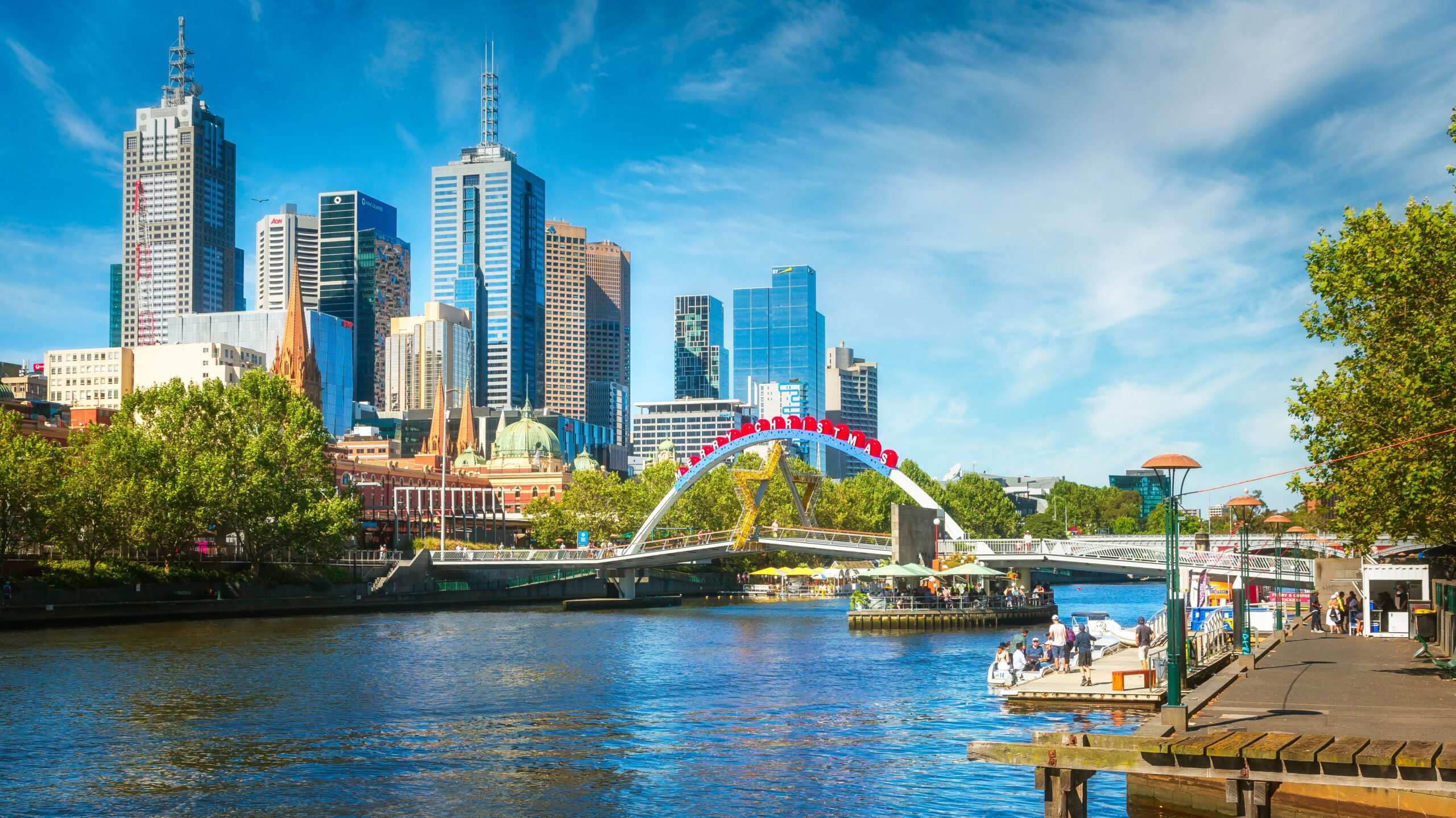
Southbank: Southbank sits directly across the Yarra River from the CBD and is home to Melbourne’s arts precinct including the Arts Centre, the Melbourne Concert Hall, the National Gallery of Victoria, and the Australian Centre for the Moving Image. The Southbank Promenade is one of Melbourne’s most beautiful riverside walks.
Getting Around Melbourne
Free tram zone: Melbourne’s free tram zone covers the entire CBD and extends to Docklands, Southbank, and the Melbourne Museum. Within this zone, all tram travel is completely free. For most visitors spending time in the city centre, the free tram zone is all the public transport you need.
Myki card: For travel beyond the free tram zone, a Myki card covers trains, trams, and buses across metropolitan Melbourne. Purchase a Myki card at Southern Cross Station, Melbourne Airport, or any 7-Eleven store. Load credit onto the card and touch on and off at every journey.
Uber and taxis: Uber and traditional taxis are widely available across Melbourne and are the most convenient option for direct point to point travel, particularly for evening outings or travel between suburbs.
The Best Things to Do in Melbourne
Federation Square: Federation Square is Melbourne’s civic heart and one of Australia’s most architecturally distinctive public spaces. Home to the Ian Potter Centre, the Australian Centre for the Moving Image, and a continuous program of public events and cultural activities. The square is also home to some of Melbourne’s best cafes and restaurants with extraordinary views across the Yarra River to the CBD skyline.
Queen Victoria Market: The Queen Victoria Market is one of the largest open air markets in the Southern Hemisphere and one of Melbourne’s most beloved institutions. Operating since 1878, the market covers two city blocks and sells fresh produce, meat, seafood, deli goods, clothing, and everything in between. The Tuesday and Thursday evening night markets in summer are extraordinary events in their own right.
Royal Botanic Gardens: The Royal Botanic Gardens sit in 38 hectares of beautifully landscaped parkland on the south bank of the Yarra River, just minutes from the CBD. Home to over 8,500 plant species, the gardens are one of Melbourne’s most beautiful and most accessible attractions. The Aboriginal Heritage Walk through the gardens is a genuinely moving and educational experience.
National Gallery of Victoria: The National Gallery of Victoria on St Kilda Road is Australia’s oldest and most visited art museum. The NGV International collection spans five millennia of art across more than 70,000 works. Entry to the permanent collection is free. Special exhibitions are ticketed and frequently extraordinary.
Melbourne’s Laneways: Melbourne’s extraordinary network of inner city laneways is one of the city’s most distinctive and most celebrated features. Hosier Lane’s wall to wall street art is one of Melbourne’s most photographed locations. Degraves Street and Centre Place are lined with the espresso bars and cafes that define Melbourne’s extraordinary coffee culture.
St Kilda Beach: St Kilda Beach is Melbourne’s most popular beach, approximately 20 minutes from the CBD by tram. The beach itself is pleasant rather than spectacular, but the surrounding Esplanade, Luna Park foreshore, and the extraordinary cafe culture of Acland Street and Fitzroy Street make St Kilda one of Melbourne’s most enjoyable half day or full day experiences.
The Best Day Trips from Melbourne
Great Ocean Road: The Great Ocean Road is one of Australia’s most iconic drives and one of Melbourne’s most visited day trips. Stretching approximately 250 kilometres along Victoria’s dramatic southwest coastline, the Great Ocean Road passes through the surf town of Torquay, the beautiful beaches of Lorne and Apollo Bay, and the extraordinary Twelve Apostles limestone stacks rising from the Southern Ocean. Allow a full day for the drive.
Yarra Valley: The Yarra Valley is Victoria’s premier wine region, approximately 1 hour east of Melbourne. Home to over 80 wineries producing some of Australia’s finest cool climate wines, the Yarra Valley also offers extraordinary food, beautiful rolling vineyard landscapes, the Healesville Sanctuary wildlife park, and the gorgeous Dandenong Ranges just minutes away.
Phillip Island: Phillip Island is home to the world famous Penguin Parade, where hundreds of Little Penguins emerge from the ocean at sunset and waddle up the beach to their burrows. The Penguin Parade is one of Australia’s most extraordinary wildlife experiences. Phillip Island is approximately 1.5 hours south of Melbourne and easily done as a day trip.
Dandenong Ranges: The Dandenong Ranges sit approximately 35 kilometres east of Melbourne and offer a complete contrast to the city. Cool temperate rainforest, towering mountain ash trees, beautiful gardens, and the charming villages of Olinda and Sassafras make the Dandenong Ranges one of Melbourne’s most beautiful and most accessible day trips.
Mornington Peninsula: The Mornington Peninsula is one of Victoria’s most popular weekend destinations, approximately 1 hour south of Melbourne. Beautiful beaches, world class wineries, extraordinary hot springs at Peninsula Hot Springs, and the stunning Cape Schanck lighthouse at the peninsula’s southern tip make this one of the most complete day trip destinations in Victoria.
Food and Coffee in Melbourne
Melbourne’s food and coffee culture is genuinely extraordinary and widely regarded as among the best in the world. The city’s multicultural population has created a food scene of extraordinary diversity and quality across every price point.
Coffee: Melbourne takes its coffee more seriously than almost any other city on earth. The laneway cafe culture of the CBD, the espresso bars of Fitzroy and Collingwood, and the extraordinary quality of coffee served across the city set a standard that has influenced cafe culture globally. Degraves Street and Centre Place in the CBD are the most concentrated expressions of Melbourne’s cafe culture.
Queen Victoria Market: The Queen Victoria Market is one of Melbourne’s great food experiences. Fresh produce, artisan cheeses, smallgoods, and international food stalls make the market one of the best places in Melbourne to assemble a picnic or simply graze.
Brunswick Street Fitzroy: Brunswick Street in Fitzroy is one of Melbourne’s great dining strips. International cuisines from Ethiopian to Japanese sit alongside extraordinary modern Australian restaurants and some of Melbourne’s best brunch destinations.
Chinatown: Melbourne’s Chinatown on Little Bourke Street is the longest continuous Chinese settlement in the Western world and home to some of the best Asian food in Australia. Cantonese, Sichuan, Vietnamese, Malaysian, and Japanese restaurants line the historic streets of this extraordinary precinct.
Practical Tips for Visiting Melbourne
Best time to visit: March to May and September to November are Melbourne’s best seasons for visitors. Mild temperatures, beautiful autumn and spring foliage, and fewer crowds than the peak summer period. Melbourne in summer can be extremely hot with temperatures regularly exceeding 40°C.
Melbourne’s weather: Melbourne is famous for its unpredictable weather. The local saying is four seasons in one day. Pack layers regardless of the season, carry a light waterproof jacket, and check the forecast before heading out each morning.
How many days do you need: A minimum of 4 days is recommended to experience Melbourne properly. Allow one full day for the CBD and laneways, one day for St Kilda and Southbank, and at least two days for day trips to the Great Ocean Road, Yarra Valley, or Mornington Peninsula.
Getting from the airport: The SkyBus connects Melbourne Airport to Southern Cross Station in the CBD every 10 minutes. The journey takes approximately 30 minutes depending on traffic. Taxis and Uber are also widely available from the airport.
Browse all Melbourne accommodation on Trip.com 👇
Have you visited Melbourne? What was your favourite experience? Share your tips in The Good Years Club community 💙
👉 Join The Good Years Club Community. https://www.facebook.com/share/g/1Fw4FHNpJr/