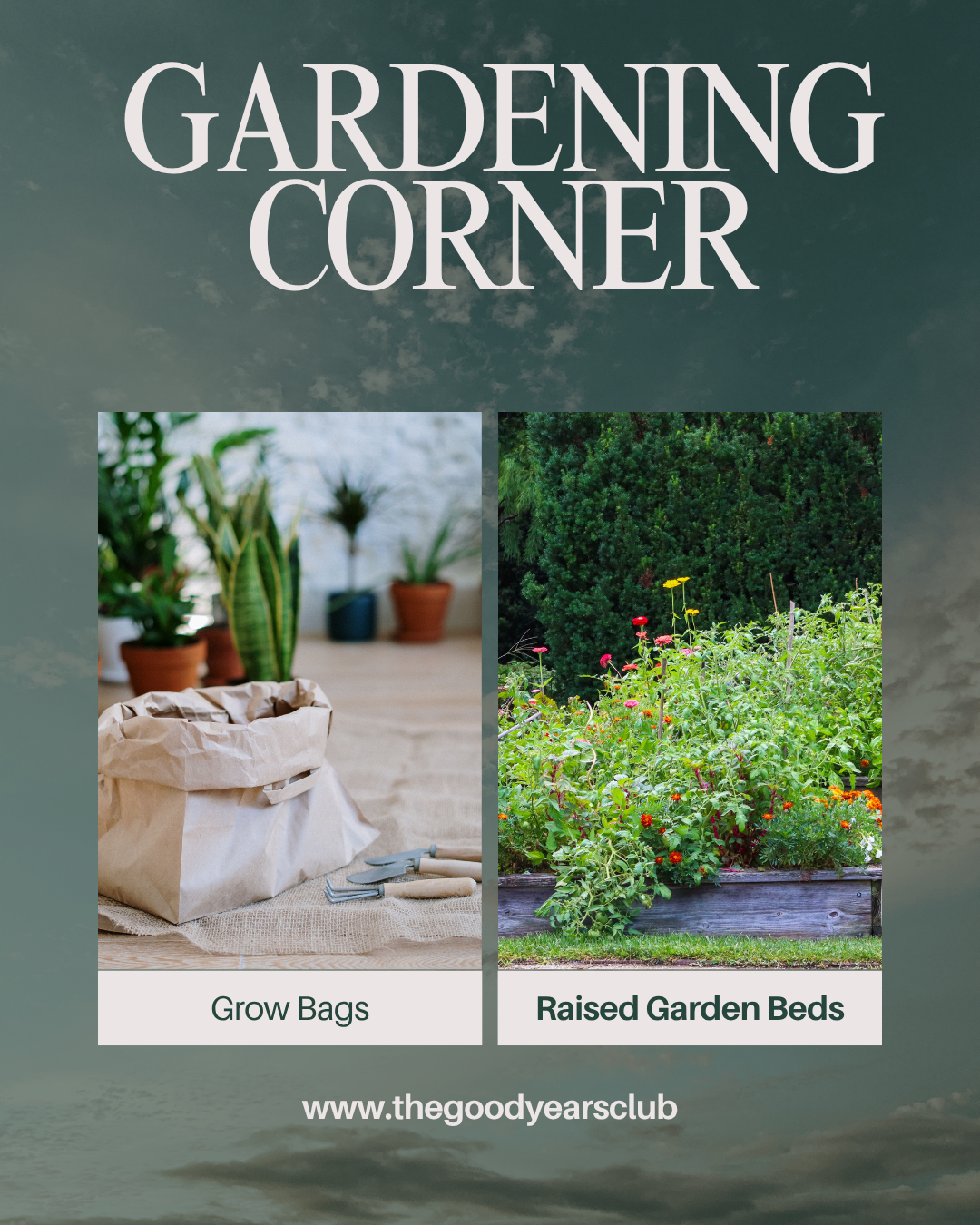
Raised Garden Beds vs Grow Bags: Which Is Better for Australian Seniors?
If you want to grow vegetables, herbs or flowers without creating a traditional garden bed, two options stand out.
Raised garden beds and grow bags.
Both can make gardening more accessible. Both give you greater control over your growing area. And both can work well in Australian gardens.
But they are not interchangeable.
Raised beds are generally better if you want a permanent, comfortable garden that you plan to use for years.
Grow bags are better if you want something inexpensive, flexible and easy to move or change.
Here is how they compare.
Raised Garden Beds vs Grow Bags at a Glance
| Raised Garden Beds | Grow Bags | |
|---|---|---|
| Initial cost | Higher | Lower |
| Lifespan | Usually longer | Usually shorter |
| Portability | Low | High |
| Soil volume | High | Low to moderate |
| Watering frequency | Usually lower | Usually higher |
| Best for small spaces | Sometimes | Excellent |
| Comfortable working height | Excellent with elevated beds | Depends on placement |
| Easy to rearrange | No | Yes |
| Best for permanent gardens | Excellent | Fair |
| Best for beginners | Excellent | Excellent |
There is no universal winner.
The better option depends on your space, budget, mobility and what you want to grow.
What Is a Raised Garden Bed?
A raised garden bed is a contained growing area positioned above the surrounding ground.
Some are only slightly raised.
Others are elevated considerably higher and can bring the growing surface much closer to waist height.
They can be made from materials such as timber or metal and come in a huge range of shapes and sizes.
The major advantage for older gardeners is obvious.
The garden can come closer to you.
Instead of repeatedly working at ground level, an appropriately designed raised bed can reduce how far you need to bend.
That can make planting, weeding and harvesting considerably more comfortable.
What Is a Grow Bag?
A grow bag is essentially a portable container designed for growing plants.
Many modern versions are made from breathable fabric and come in sizes ranging from small herb containers to much larger bags capable of growing vegetables.
They are simple.
Fill the bag with an appropriate growing medium, plant into it and position it somewhere suitable.
When the season ends, some bags can be emptied, cleaned according to the manufacturers instructions and stored.
That flexibility is their biggest advantage.
Why Raised Beds Can Be Better After 60
1. They Can Reduce Bending
This is probably the biggest advantage.
A sufficiently elevated garden bed brings the soil closer to you.
That can reduce the amount of bending and kneeling involved in common gardening jobs.
The important word is sufficiently.
A bed raised only slightly above ground level may still require substantial bending.
If accessibility is your priority, choose the height based on how you actually intend to garden.
If arthritis is making gardening harder, our complete guide to gardening with arthritis has more practical ways to adapt your garden.
2. They Hold More Soil
A larger raised bed generally provides considerably more growing volume than an individual grow bag.
That gives roots more room and can make it easier to grow multiple plants together.
Larger soil volumes also tend to change temperature and moisture levels less rapidly than small containers.
That can be useful during Australian summers.
3. They Create a Permanent Growing Area
If you know where you want your vegetable garden, permanence can be an advantage.
You can establish the bed properly.
Improve the soil over time.
Install irrigation.
Create paths around it.
Keep gardening equipment nearby.
Eventually it becomes a dedicated part of the garden rather than a collection of containers.
4. They Can Look More Integrated
A well designed raised bed can become part of the landscaping.
Metal, timber and masonry beds can all look attractive when they suit the surrounding garden.
If appearance matters to you, raised beds usually offer more opportunities to create a permanent garden feature.
The Disadvantages of Raised Garden Beds
Higher Initial Cost
A raised bed itself costs money.
Then you need to fill it.
A large bed can require a substantial volume of growing material, so calculate this before buying rather than discovering the cost after the structure is sitting in your backyard.
They Are Difficult to Move
Once a large raised bed is assembled and filled, assume it is staying there.
That means location matters.
Before installation, consider:
Sunlight
Access to water
Drainage
Path access
How easily you can reach every part of the bed
What happens during the hottest part of summer
Take the time to get this decision right.
Materials Do Not Last Forever
Different raised bed materials have different strengths and weaknesses.
Timber can deteriorate over time.
Metal can become hot in direct sun.
Poor quality products may not cope well with years outdoors.
When buying a raised bed, look beyond appearance and consider durability, drainage and how it will perform in your local climate.
Why Grow Bags Can Be Better
1. They Are Cheap to Try
Grow bags offer a relatively inexpensive way to experiment with growing food.
You can start with a few rather than committing to an entire garden setup.
That makes them particularly useful if you are not yet sure how much vegetable gardening you actually want to do.
2. They Are Flexible
This is where grow bags really shine.
If a location does not receive enough sun, you may be able to move smaller bags.
If you move house, they are much easier to deal with than a permanent raised bed.
If you decide gardening is not for you, you have not redesigned the backyard.
For renters, that flexibility can be particularly valuable.
3. They Work in Small Spaces
You do not necessarily need a backyard.
Grow bags can potentially be used on suitable:
Patios
Courtyards
Balconies
Paved areas
Small gardens
Just make sure the location can safely handle the weight, drainage and water involved.
This is particularly important on balconies.
Wet soil is heavy, so check any relevant building restrictions or structural requirements rather than assuming a balcony can support unlimited containers.
4. You Can Separate Crops
Individual bags make it easy to keep plants separate.
One bag could contain potatoes.
Another tomatoes.
Another herbs.
If one crop develops a soil problem, the growing medium is not necessarily shared across the entire garden.
The Disadvantages of Grow Bags
They Can Dry Out Faster
Containers have limited soil volume.
That means moisture can change more quickly than in a larger garden bed.
Fabric grow bags can also lose moisture through their sides.
During hot Australian weather, this means you need to monitor them carefully.
Do not assume a watering schedule that works in spring will automatically work during a heatwave.
Check the growing medium itself.
They May Need More Frequent Attention
The flexibility of containers comes with a tradeoff.
Smaller growing volumes mean there is less buffer when it comes to water and nutrients.
You may need to pay closer attention to your plants than you would in a larger established bed.
They Are Usually Lower to the Ground
A grow bag sitting on concrete does not solve the bending problem.
If accessibility is the reason you are changing your garden, think about where the bags will actually sit.
A suitable stable raised platform may improve accessibility, but it must safely support the considerable weight of wet growing medium.
They Will Not Last Forever
Grow bag lifespan varies considerably according to construction, material, exposure and use.
Treat them as a potentially replaceable part of the garden rather than assuming one set will last indefinitely.
Which Is Better for Arthritis?
Usually, a properly elevated raised garden bed has the advantage.
The reason is not that plants grow better in it.
It is accessibility.
If the bed brings plants to a comfortable working height, it can reduce the amount of work you perform close to ground level.
But design matters enormously.
An elevated bed that is too wide can still force you to reach awkwardly.
A grow bag placed on a suitable raised surface may be more comfortable than a badly designed raised bed.
So do not shop by product category alone.
Think about the position your body will actually be in while gardening.
Which Is Better for Vegetables?
Both.
The more useful question is:
Which is better for the vegetable you want to grow?
Leafy greens and herbs can work in relatively compact spaces.
Larger plants need more room.
Some crops develop extensive root systems.
Others are well suited to containers.
The size of the container matters just as much as whether it is technically called a raised bed or grow bag.
If growing food is your goal, read our complete guide to starting a vegetable garden in retirement.
Which Is Better for Australian Summers?
Neither automatically wins.
Both require sensible watering.
Grow bags can dry relatively quickly because of their smaller volume and breathable sides.
Raised beds can also dry out, particularly if they are exposed to intense sun and hot weather.
Your location matters enormously.
Darwin does not have the same gardening conditions as Hobart.
Perth does not have the same conditions as Brisbane.
Choose plants appropriate for your climate, monitor soil moisture and adjust watering according to actual conditions rather than following a rigid national schedule.
Mulching suitable raised beds may also help reduce moisture loss.
Which Is Better for Renters?
Grow bags.
This is one of the easiest decisions in the comparison.
They require less permanent modification and are considerably easier to relocate.
A renter can build a surprisingly productive container garden without installing permanent garden beds.
Just consider where excess water will drain and whether your lease, strata or building rules impose any restrictions.
Which Is Better if You Travel?
This is more complicated.
Neither option waters itself.
If you regularly disappear for several weeks in a caravan, your garden needs a watering plan regardless of the container.
A properly designed irrigation system can make a significant difference.
You might also choose fewer plants during periods when you know you will be travelling frequently.
There is little point creating an enormous vegetable garden that makes you reluctant to leave home.
The garden should fit your retirement lifestyle, not control it.
What About Self Watering Planters?
There is a third option worth considering.
Self watering planters contain a reservoir designed to make water available to plants over time.
They can be particularly useful for container gardening where frequent watering is inconvenient.
They are not maintenance free.
The reservoir still needs refilling, and different plants have different moisture requirements.
But for some gardeners they offer a useful middle ground between conventional pots and larger garden beds.
Do You Need Both?
Potentially.
This does not have to be an either or decision.
A raised bed might contain your main vegetable garden.
Grow bags could hold potatoes or experimental crops.
Pots might contain herbs near the kitchen.
A self watering planter could sit on the patio.
Different growing systems can perform different jobs.
That is often better than forcing every plant into the same setup.
Our Pick for Most Retired Gardeners
If you own your home, have suitable space and expect to keep gardening for years, we would generally choose an appropriately sized elevated raised garden bed.
The accessibility advantage is difficult to ignore.
If you rent, have limited space, are unsure whether you will stick with gardening or simply want the cheapest way to start, grow bags make more sense.
And if you are undecided?
Start with grow bags.
You can always build a raised garden later.
What to Look for in a Raised Garden Bed
Before buying, consider:
Height
Will it actually reduce bending?
Width
Can you reach the centre comfortably?
Material
Is it suitable for long term outdoor use?
Drainage
Where will excess water go?
Capacity
How much growing medium will you need to fill it?
Location
Will your plants receive appropriate sunlight?
Access
Can you comfortably move around the bed?
Do not choose purely on price.
A cheap garden bed in the wrong location or at the wrong height is not a bargain.
What to Look for in Grow Bags
Consider:
Size
Match the container volume to the crop.
Handles
Useful if you expect to move smaller bags, although filled bags can still become very heavy.
Construction
Look for durable stitching and material designed for repeated outdoor use.
Drainage
Fabric bags generally drain freely, so think about where that water will end up.
Placement
Avoid putting them somewhere that creates a trip hazard or drainage problem.
And remember:
A large grow bag filled with wet soil is not lightweight.
Move it before filling whenever possible.
Make the Rest of the Garden Easier Too
Raised beds and grow bags solve only part of the problem.
You can reduce garden maintenance further with:
Irrigation
Mulch
Suitable plants
Accessible paths
Smaller lawns
Comfortable tools
Better garden layout
Our complete low maintenance gardening guide for seniors covers all of these strategies.
And if equipment is becoming uncomfortable to use, see our gardening tools for seniors guide.
The Bottom Line
Raised garden beds and grow bags are both excellent ways to make gardening more manageable.
Choose raised beds if you want a permanent growing area, greater soil volume and the option to bring plants to a more comfortable working height.
Choose grow bags if you want something affordable, portable and flexible.
You do not need the perfect garden setup from day one.
Start with the option that suits your life now.
You can always expand later.