Creatine After 60 — What the Research Actually Says
For most of its history, creatine has been associated with one image — young men in gyms trying to build muscle as fast as possible. That association has done creatine a genuine disservice, because the emerging research on creatine for older adults is some of the most interesting and practically relevant nutrition science available right now. Here’s what the research actually says about creatine after 60 — the benefits, the evidence, and what’s worth knowing before you consider it.
What Is Creatine — And Why Does It Matter After 60?
Creatine is a naturally occurring compound found primarily in muscle tissue and the brain. The body produces it from amino acids — primarily in the liver and kidneys — and it plays a central role in energy production, particularly during short, high-intensity activities.
The biological process of aging is typically associated with a decrease in muscle quantity, muscle performance primarily strength, bone mass and architecture, functionality, and neurological and cognitive function. From a healthy aging perspective, interventions that have the potential to overcome or attenuate these decrements are clinically relevant.
The important thing to understand about creatine specifically is that it naturally declines with age — and this decline has meaningful implications for both physical and cognitive health.
Since creatine levels are likely to decline with age, and since the brain may require higher doses of creatine than other energy demanding tissues, creatine supplementation may provide a more favourable environment for improved cognitive functioning and brain health in older adults.
The Physical Benefits — What the Research Shows
Muscle Strength and Mass
This is where the evidence for creatine in older adults is strongest — and genuinely compelling.
In older adults, short-term creatine supplementation, independent of exercise training, increases body mass, enhances fatigue resistance, increases muscle strength, and improves the performance of activities of daily living. In older adults, concurrent creatine supplementation and resistance training increase lean body mass, enhance fatigue resistance, increase muscle strength, and improve performance of activities of daily living to a greater extent than resistance training alone.
A combination of creatine supplementation and resistance training results in greater gains in muscle strength compared with resistance training and a placebo among older individuals.
Why this matters after 60: Muscle loss — sarcopenia — accelerates significantly after 60, and it directly affects the ability to get up from chairs, climb stairs, carry groceries, recover from illness, and maintain independence. Maintaining and building muscle after 60 is one of the most important things you can do for long term quality of life. Creatine appears to meaningfully support that effort, particularly when combined with resistance training.
Bone Health
Creatine supplementation plus resistance training results in a greater increase in bone mineral density than resistance training alone.
Creatine monohydrate has beneficial effects on bone area and thickness in older adults — with potential application for treating age-related osteoporosis.
For older adults concerned about osteoporosis and fracture risk — particularly women after menopause — this is a meaningful finding worth discussing with a GP or specialist.
Fall Prevention
Creatine monohydrate has potential to prevent falls through improvement in neural function, or improvement in muscle quality, both of which can affect motor ability and therefore reduce susceptibility of falling in older adults.
Given that falls are the leading cause of injury in older Australians — a consistent balance and strength training program combined with creatine supplementation may meaningfully reduce fall risk.
The Brain Health Benefits — What the Emerging Research Says
This is the area generating the most excitement in 2026 — and where the research, while genuinely promising, is still developing.
Creatine is a well-studied dietary supplement that is known to benefit aging muscle and bone, especially when combined with resistance training. Some studies suggest that creatine may also be favorable for cognitive function, yet these independent effects have not been thoroughly reviewed in older adults until recently.
A significant systematic review published in February 2026 specifically examined the evidence for creatine and cognition in older adults — drawing on research across eight electronic databases.
The current evidence suggests that creatine may be associated with benefits for cognition in generally healthy older adults. However, high-quality clinical trials are warranted to further validate this relationship.
Why does creatine affect the brain?
Creatine crosses the blood-brain barrier and may be protective for brain health. The brain is one of the most energy-demanding organs in the body — and creatine plays a direct role in cellular energy production. As creatine levels decline with age, the brain’s energy availability may be affected — and supplementation may help restore that availability.
The honest caveat: The brain health research is genuinely promising — but it is still emerging. The evidence for muscle and physical benefits is significantly stronger and more consistent than the cognitive evidence at this point. If you’re considering creatine primarily for brain health, it’s worth knowing that the physical benefits are well established while the cognitive benefits are encouraging but not yet definitive.
What Type of Creatine Is Best?
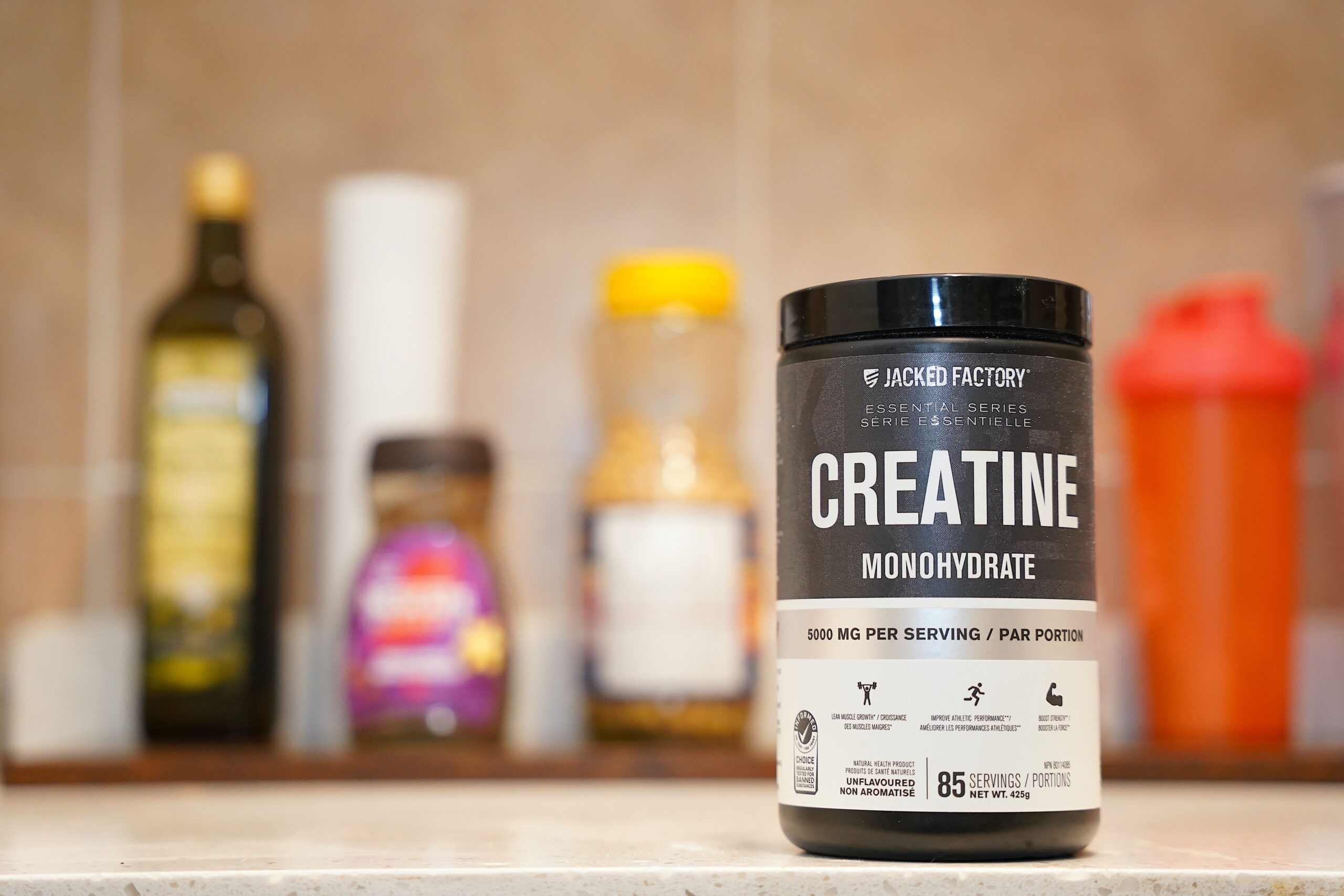
Creatine monohydrate is the most extensively studied form — accumulating research shows that creatine monohydrate, primarily when combined with exercise training, is safe and has beneficial effects on measures of whole-body lean body mass, regional muscle size, muscle strength, bone area and thickness, functional ability, glucose kinetics, cognition and memory.
The newer proprietary forms — creatine HCL, buffered creatine, and various branded versions — are generally more expensive with significantly less research behind them. There is no proven advantage over plain creatine monohydrate for most people. When in doubt, the research-backed choice is straightforward creatine monohydrate.
How Much to Take
The research on creatine in older adults typically uses doses of 3-5 grams per day — a maintenance dose that can be sustained long term.
Some older protocols used a loading phase of higher doses for the first week — but current evidence suggests this isn’t necessary for older adults and may cause unnecessary digestive discomfort. Starting with 3-5 grams per day and staying consistent over weeks and months appears to be both effective and well tolerated.
Employing a relative dosing strategy tailored to each individual rather than a one size fits all approach may provide a more favourable environment for improved cognitive functioning and brain health in older adults, especially in those with higher body weight.
Is Creatine Safe After 60?
Safety is a legitimate and important question — particularly for older adults who may be managing other health conditions or taking medications.
Creatine monohydrate supplementation is safe and has beneficial effects in older adults — with multiple benefits and potential application for treating age-related sarcopenia, osteoporosis, frailty, and those with metabolic and neuromuscular disorders.
Important considerations:
- Kidney health — creatine is processed by the kidneys, and anyone with existing kidney disease or impaired kidney function should speak with their GP before starting. For people with healthy kidneys, creatine at standard doses is generally well tolerated.
- Hydration — creatine draws water into muscle cells, making adequate hydration important. Staying properly hydrated is already important after 60, and creatine makes it slightly more so.
- Medications — if you take any regular medications, particularly those affecting kidney or liver function, check with your GP before adding any supplement.
- The honest bottom line on safety — for generally healthy older adults without kidney disease, creatine monohydrate at 3-5 grams per day has a genuinely strong safety record across decades of research.
Who Might Benefit Most
Based on the current research, creatine supplementation after 60 may be particularly worth considering for:
- People actively doing resistance training who want to maximise muscle and strength gains
- People concerned about muscle loss and sarcopenia
- People with low dietary creatine intake — particularly vegetarians and vegans, whose diets contain no naturally occurring creatine
- People with a family history of dementia who are proactively supporting brain health
- People concerned about bone density and osteoporosis risk
Who Should Be Cautious
- Anyone with existing kidney disease or impaired kidney function — speak to your GP first
- Anyone on medications affecting kidney or liver function — check with your GP first
- Anyone currently undergoing chemotherapy or other treatments — always check with your treating team
The Bottom Line
Creatine monohydrate is one of the most thoroughly researched supplements available — and the evidence for its benefits in older adults is genuinely compelling, particularly for muscle strength, lean body mass, bone density, and fall prevention.
The brain health research is the most exciting emerging area — and while it’s not yet definitive, it’s promising enough to be worth taking seriously, particularly for people with a family history of dementia or cognitive decline.
If you’re considering creatine — start with plain creatine monohydrate at 3-5 grams per day, combine it with resistance training for the best results, stay well hydrated, and have a conversation with your GP if you have any kidney concerns.
It’s not just for bodybuilders. It never really was.
Are you taking creatine or considering it? Share your experience in The Good Years Club community — we’d love to hear what difference it’s made 💙
👉 Join The Good Years Club Community — https://www.facebook.com/share/g/1Fw4FHNpJr/