The Best Low Impact Exercises for Australians Over 60
The Best Low Impact Exercises for Australians Over 60
Here it is — ready to paste into WordPress:
Title:
The Best Low Impact Exercises for Australians Over 60
Meta Description: “Looking for safe and effective exercise after 60? Here are the best low impact exercises for Australians over 60 that are gentle on your joints but powerful for your health.”
Intro: Exercise after 60 doesn’t have to mean pounding the pavement or lifting heavy weights. Low impact exercise is not only gentler on your joints — it’s actually one of the most effective ways to build strength, improve cardiovascular health, maintain flexibility, and boost your mood. These are the best low impact exercises available to Australians over 60 and how to get started with each one today.
What Is Low Impact Exercise?
Low impact exercise means any physical activity where at least one foot remains on the ground at all times — or where your body weight is supported by water or a machine. This dramatically reduces the stress on your joints while still delivering significant health benefits.
For Australians over 60 low impact exercise is often more beneficial than high impact alternatives because:
- It can be sustained long term without injury
- It’s accessible regardless of current fitness level
- It puts minimal stress on knees, hips, and ankles
- It’s suitable for people with arthritis, osteoporosis, or joint replacements
1. Walking
Walking is the king of low impact exercise and the most accessible physical activity available. It requires no equipment, no gym membership, and can be done anywhere at any time.
Health benefits:
- Reduces heart disease risk by up to 35 percent
- Strengthens bones and reduces osteoporosis risk
- Improves mood and reduces anxiety
- Lowers blood pressure
- Reduces dementia risk
How to start: Begin with 15 to 20 minutes at a comfortable pace and gradually increase to 30 minutes five days per week. A good pair of supportive walking shoes is the only investment needed.
Queensland tip: Walk early morning or late afternoon to avoid the heat. The Brisbane River Walk, Kangaroo Point Cliffs, and your local parklands are all excellent options.
2. Swimming
Swimming is widely considered the perfect exercise for older adults. The water supports your body weight completely eliminating virtually all joint stress while providing resistance that builds strength and cardiovascular fitness simultaneously.
Health benefits:
- Full body workout with zero joint impact
- Excellent for arthritis sufferers
- Builds muscle strength and endurance
- Improves lung capacity
- Reduces stress and improves sleep
How to start: Most council swimming pools across Queensland offer discounted senior entry and many run dedicated aqua aerobics classes specifically for older adults. Even gentle lap swimming for 20 to 30 minutes three times per week delivers significant health benefits.
3. Cycling
Cycling — whether outdoors or on a stationary bike — is a fantastic low impact cardiovascular exercise that builds leg strength and improves heart health without stressing your knees.
Health benefits:
- Strong cardiovascular workout
- Builds leg and core strength
- Very easy on knee and hip joints
- Can be done indoors on a stationary bike regardless of weather
- Social when done in groups
How to start: A stationary exercise bike is a worthwhile investment for home use — prices start from around $200 on Amazon Australia. Outdoor cycling on flat paths like the Brisbane Riverwalk cycling track is also excellent.
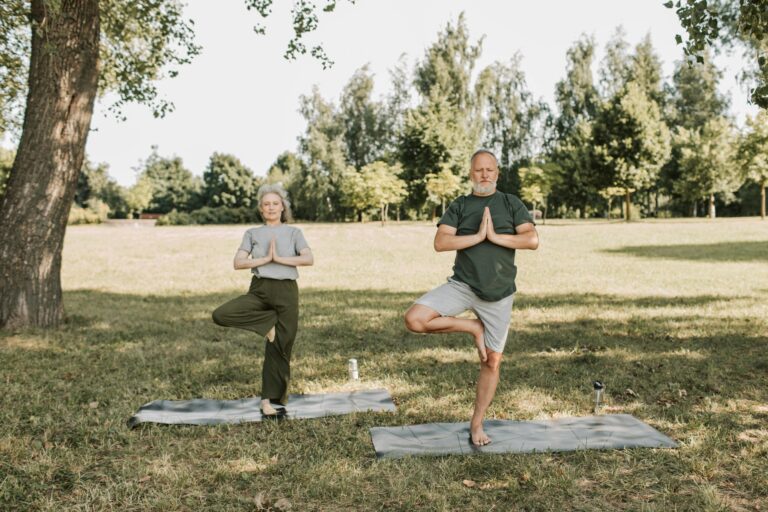
4. Yoga
Yoga combines gentle movement, stretching, balance, and breathing in a way that delivers remarkable benefits for older adults. Modern yoga classes offer many styles from gentle restorative yoga to more active flow classes — all appropriate for different fitness levels.
Health benefits:
- Dramatically improves flexibility and range of motion
- Builds core strength and balance
- Reduces fall risk significantly
- Reduces stress and anxiety
- Improves sleep quality
- Reduces chronic pain including arthritis
How to start: Many community centres across Queensland run yoga classes specifically designed for seniors. Free beginner yoga videos on YouTube — search “yoga for seniors” — are also an excellent starting point at home with no cost.
5. Tai Chi
Tai Chi is a gentle Chinese martial art consisting of slow controlled movements performed in sequence. It has been extensively researched for its benefits in older adults and the results are remarkable.
Health benefits:
- Reduces fall risk by up to 45 percent — the most researched fall prevention activity available
- Improves balance and coordination
- Reduces blood pressure
- Improves cognitive function
- Reduces symptoms of depression and anxiety
- Builds gentle strength and flexibility
How to start: Tai Chi classes are available at most community centres across Australia and are often subsidised for seniors. Many local councils run free outdoor Tai Chi sessions in parks. Search “Tai Chi for seniors Queensland” to find a class near you.
6. Aqua Aerobics
Aqua aerobics combines the benefits of water based exercise with the social energy of a group fitness class. The water provides both support and resistance making it an ideal full body workout for older adults with joint issues.
Health benefits:
- Full body workout with minimal joint stress
- Builds strength and cardiovascular fitness simultaneously
- Excellent for arthritis and post surgery recovery
- Highly social — great for meeting people
- Suitable for non swimmers as classes are conducted in shallow water
How to start: Most public swimming pools across Queensland run aqua aerobics classes specifically for seniors. Check your local council aquatic centre for class schedules and senior pricing.
7. Pilates
Pilates focuses on core strength, posture, flexibility, and controlled movement. It’s particularly beneficial for older adults because it directly addresses the physical changes that come with ageing — reduced core strength, poor posture, decreased flexibility, and increased fall risk.
Health benefits:
- Builds deep core strength
- Dramatically improves posture
- Reduces back pain
- Improves balance and coordination
- Increases flexibility and range of motion
- Reduces fall risk
How to start: Look for a beginner or seniors Pilates class at your local gym or community centre. Many physiotherapy practices also run clinical Pilates classes specifically for older adults with health conditions — these can often be partially covered by Medicare under a Chronic Disease Management plan.
8. Resistance Band Training
Resistance bands are stretchy elastic bands that provide gentle resistance for strength training without the need for heavy weights or gym equipment. They are inexpensive, portable, and incredibly versatile.
Health benefits:
- Builds muscle strength which naturally declines after 60
- Improves bone density reducing osteoporosis risk
- Improves balance and stability
- Reduces risk of falls
- Can be done at home with minimal space
How to start: A basic resistance band set costs around $15 to $30 on Amazon Australia and comes with instructions for different exercises. YouTube has hundreds of free resistance band workout videos specifically designed for seniors.
9. Golf
Golf might not look like exercise but a round of golf involves several kilometres of walking, repeated rotational movement, and a surprising amount of physical activity spread over several hours.
Health benefits:
- Several kilometres of walking per round
- Social and mentally engaging
- Improves balance and coordination
- Time outdoors in natural environment
- Low injury risk compared to most sports
How to start: Most golf clubs across Queensland offer beginner lessons and many have specific programs for older adults taking up the sport for the first time. Public golf courses offer casual play at reasonable rates.
10. Dancing
Dancing is one of the most joyful and underrated forms of exercise available. It combines cardiovascular activity with coordination, balance, social connection, and genuine fun in a way that few other activities can match.
Health benefits:
- Excellent cardiovascular workout
- Improves balance and coordination
- Reduces dementia risk — the cognitive demands of learning dance steps are particularly beneficial for brain health
- Deeply social
- Improves mood significantly
- Suitable for all fitness levels
How to start: Ballroom dancing, line dancing, and folk dancing all have active communities across Queensland with classes available at most community centres. Many clubs offer beginner nights specifically for newcomers.
Building Your Weekly Exercise Routine
The Australian Physical Activity Guidelines recommend that adults over 65 aim for:
- At least 30 minutes of moderate intensity activity on most days
- Muscle strengthening activities on at least two days per week
- Activities that challenge balance on at least three days per week
A simple weekly routine combining exercises from this list might look like:
| Day | Activity | Duration |
|---|---|---|
| Monday | Walking | 30 minutes |
| Tuesday | Yoga or Pilates | 45 minutes |
| Wednesday | Swimming or Aqua Aerobics | 30 minutes |
| Thursday | Walking | 30 minutes |
| Friday | Tai Chi or Dancing | 45 minutes |
| Saturday | Cycling | 30 minutes |
| Sunday | Gentle stretching and rest | 20 minutes |
The Most Important Thing
The best exercise is the one you actually enjoy and will do consistently. Start with one activity from this list that genuinely appeals to you and build from there.
Even 10 minutes of gentle movement every day is significantly better than occasional intense exercise. Small consistent steps compound into remarkable health improvements over months and years.
Which of these exercises do you enjoy most? Come and share it in The Good Years Club community on Facebook — we would love to hear what’s keeping you active.