Walking After 60: Why It Is One of the Best Exercises for Healthy Ageing
Walking might be one of the most underrated forms of exercise available after 60.
It doesn’t require a gym membership. You don’t need expensive equipment. You can do it alone, with your partner, with the dog or with a group of friends. You can start with five minutes around the block and gradually build from there.
Most importantly, walking is something many people can realistically continue doing for years.
That matters because when it comes to healthy ageing, finding exercise you can consistently do is far more useful than following an ambitious program for three weeks and then stopping.
Walking isn’t the only exercise you should consider after 60, but it is one of the simplest places to start.
Why Walking Matters More As You Get Older
Regular physical activity becomes increasingly important as we age.
The Australian Government’s current physical activity guidelines for people aged 65 and over recommend being active regularly and limiting long periods spent sitting.
Walking is one of the easiest ways to add more movement to your day.
Depending on your pace and fitness, a walk can contribute towards your moderate-intensity physical activity while also helping you spend less time sitting.
But the benefits go beyond simply ticking off an exercise target.
Walking gets you outside, gives your day some structure and can be a surprisingly social activity.
And unlike many forms of exercise, there is a very low barrier to getting started.
How Much Walking Should You Do After 60?
There isn’t one perfect number of kilometres or steps that every person over 60 needs to achieve.
The Australian guidelines recommend that older adults aim for 30 minutes or more of moderate-to-vigorous physical activity on most days.
A brisk walk can be one way of working towards that.
What counts as “brisk” will be different for everyone.
A useful guide is that you’re moving with some purpose and breathing harder than you would while casually strolling, while still being able to speak.
If 30 minutes feels unrealistic right now, don’t let that stop you from starting.
Begin with what you can comfortably manage.
That might be ten minutes.
It might be a walk to the end of the street and back.
Over time, you can gradually increase how long, how often or how quickly you walk.
The goal isn’t to prove anything on your first day. It’s to create something you can keep doing.
Do You Need to Walk 10,000 Steps a Day?
No.
Ten thousand steps can be a useful personal goal if you enjoy tracking your activity, but it isn’t a magic number that every older Australian needs to reach.
Someone currently averaging 2,000 or 3,000 steps a day may benefit from gradually increasing their movement without ever reaching 10,000.
Instead of becoming fixated on one number, look at your own starting point.
If you average 4,000 steps, could you gradually move towards 5,000?
Could you add a ten-minute walk after breakfast?
Could you walk to the local shops instead of driving occasionally?
Those small changes can make an active lifestyle feel much more achievable.
Walking Is Particularly Good Because It Fits Into Real Life
This might be walking’s biggest advantage.
Exercise doesn’t help much if you hate doing it so much that you constantly avoid it.
Walking can become part of things you’re already doing.
You can walk while catching up with a friend.
Walk the dog.
Explore somewhere new.
Walk to get a coffee.
Take a lap around the park while your grandchildren play.
Park slightly further away from the shops.
Go for a short walk after dinner.
It doesn’t always have to feel like a formal workout.
That makes walking particularly useful in retirement, when the routine and incidental movement that came from commuting or working may have disappeared.
Walking Can Be Social Too
Retirement can change more than your work schedule.
For some people, leaving work also means losing a large amount of everyday social contact.
Walking can help fill some of that gap.
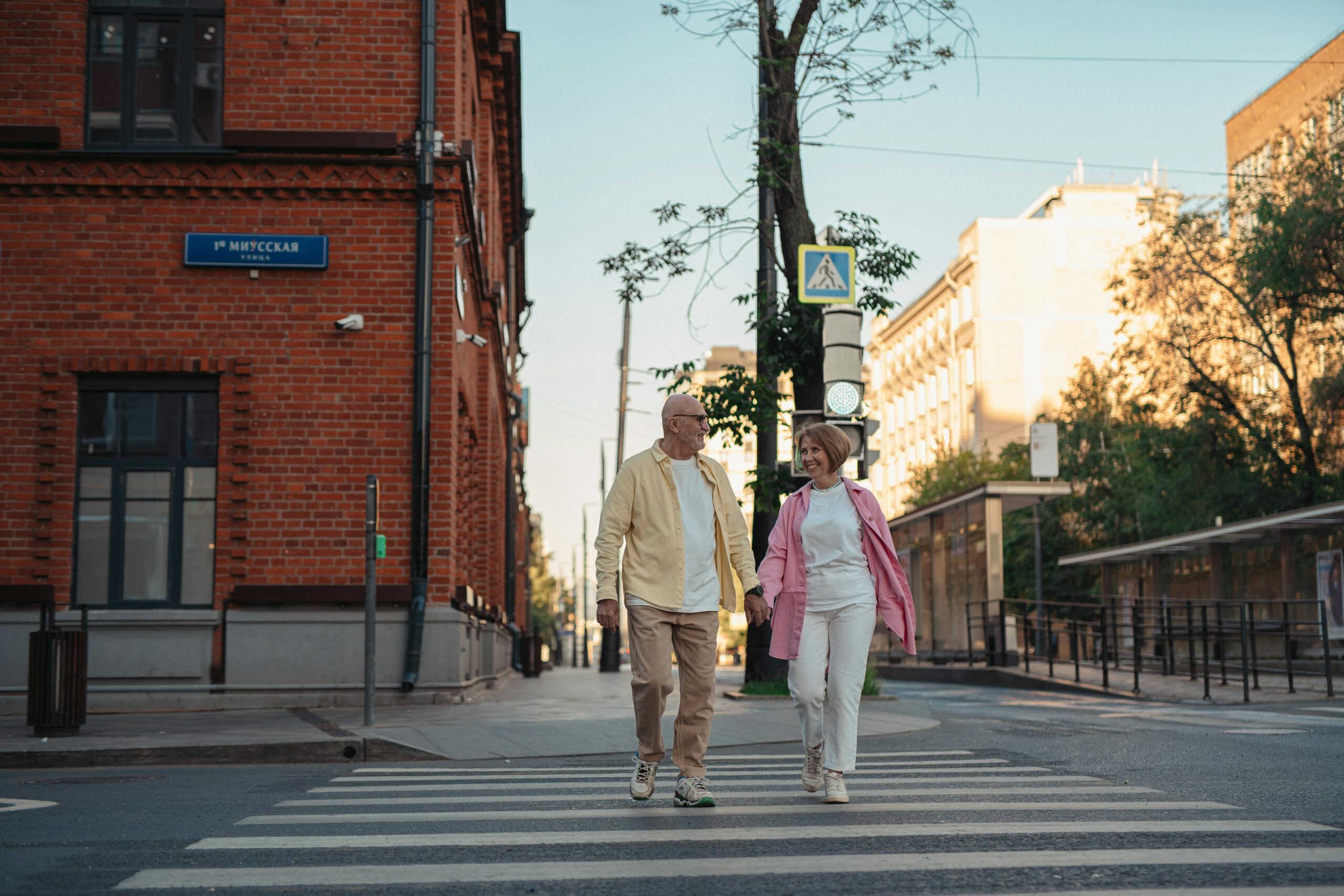
A regular morning walk with your partner, neighbour or friend gives you a reason to catch up while doing something good for your health.
Walking groups can take that further.
Instead of thinking, “I have to exercise today,” you’re meeting people for a walk.
That small difference can make physical activity much easier to stick with.
Walking Can Give Your Day Structure
There is another benefit that isn’t measured in steps.
Routine.
When you stop working, the structure that organised your week can suddenly disappear.
A regular morning or afternoon walk can become a simple anchor in your day.
Wake up.
Have breakfast.
Go for your walk.
You get outside, move your body and have something you’ve accomplished before the rest of the day begins.
For some people, that routine is just as valuable as the exercise itself.
Walking Outdoors Adds Something Extra
You don’t have to walk on a treadmill.
Australia has an enormous variety of places where walking can become part of enjoying retirement rather than simply “doing cardio.”
That might mean a local park, beach path, bushwalk, botanical garden, river walk or neighbourhood loop.
Walking can give you a reason to explore places you would otherwise drive past.
And when travelling around Australia, walking is one of the best ways to actually experience a destination.
Instead of seeing retirement exercise as something you have to do before enjoying your day, walking can become part of the day you enjoy.
But Walking Isn’t Everything
This is probably the most important point in this article.
Walking is excellent.
But walking alone doesn’t cover everything recommended for healthy ageing.
Australia’s 2026 physical activity guidelines recommend that older adults also perform:
Muscle-strengthening activities on at least two days each week.
And:
Activities targeting mobility, balance and coordination on at least three days each week.
That means a more complete exercise routine might look something like:
Walking regularly + strength training twice a week + some balance and mobility work.
Strength training becomes particularly valuable as we age because maintaining the ability to produce force helps with ordinary life.
Getting out of a chair.
Carrying groceries.
Climbing stairs.
Picking things up.
Continuing to do those things independently is a pretty good reason to keep your muscles working.
You Don’t Have to Join a Gym
Strength training doesn’t automatically mean lifting heavy barbells.
Depending on your ability, it might include:
- sitting down and standing up from a chair
- resistance-band exercises
- wall or bench push-ups
- step-ups
- calf raises
- carrying appropriate loads
- resistance machines
- free weights.
The right starting point depends on the individual.
If you’re already comfortable in a gym, fantastic.
If you’ve never lifted a weight in your life, you can start much more simply.
Walking can be your foundation while you gradually introduce other forms of activity.
What About Balance?
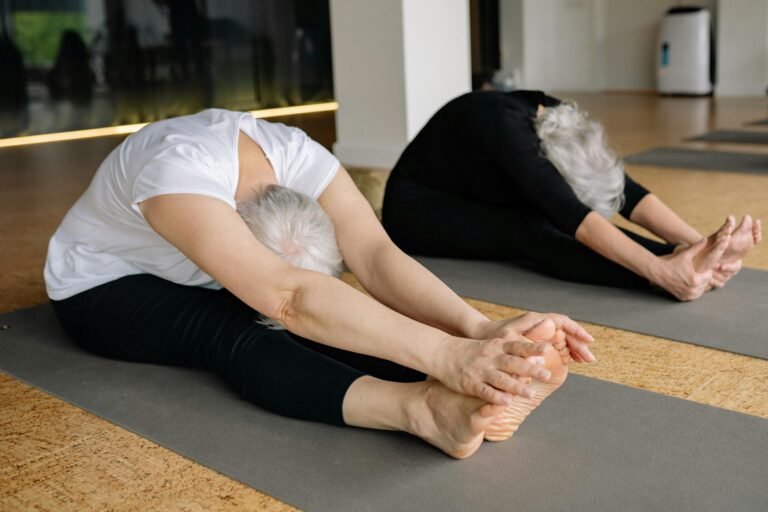
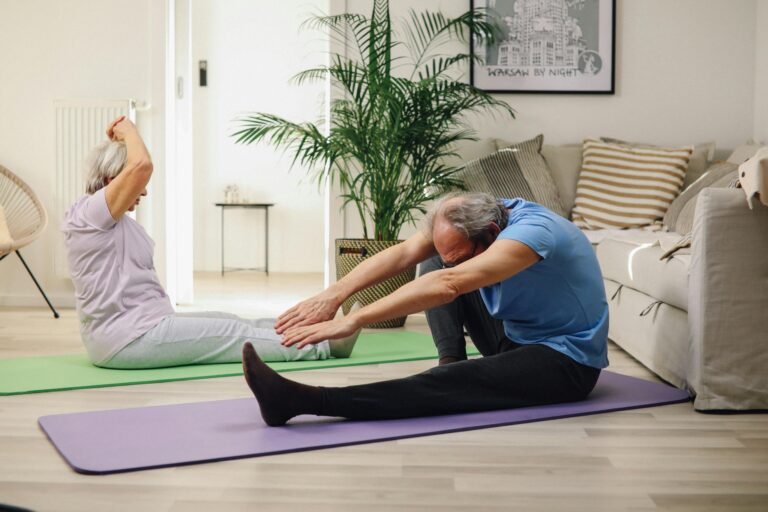
Balance deserves particular attention as we get older.
The Australian guidelines specifically recommend activities targeting balance, mobility and coordination.
Some exercises can be very simple, but the appropriate difficulty depends on your current ability and fall risk.
If you’re unsteady on your feet or have previously fallen, don’t simply copy difficult balance exercises you see online.
An appropriately qualified health or exercise professional can help you find exercises suited to your ability.
How to Start Walking Again After Being Inactive
Don’t begin by deciding that you’re going to walk five kilometres every morning for the rest of your life.
Start with a distance that feels almost too easy.
Perhaps that’s five or ten minutes.
Do that consistently.
Once it becomes comfortable, add a little more.
You might progress from:
10 minutes
to 15 minutes
to 20 minutes
and eventually to a regular 30-minute walk.
You don’t need to rush through those stages.
Someone who has been inactive for several years is starting from a very different place from someone who already plays golf three times a week.
Work from your starting point.
How to Make Walking a Habit
The best walking routine is one that becomes part of your normal week.
One of the easiest ways to achieve that is to attach your walk to something you already do.
For example:
After breakfast, I walk for 20 minutes.
Or:
After dinner, my partner and I walk around the neighbourhood.
You don’t have to rely on motivation every day if walking simply becomes part of your routine.
Having a regular route can help too.
You know how long it takes, where the hills are and roughly how far you’ve travelled.
Then, when you want something different, explore somewhere new.
What If Walking Hurts?
Exercise can involve effort, but you shouldn’t assume that significant pain is something you simply have to push through.
Foot, knee, hip and back problems can all affect walking.
Sometimes changing footwear, walking surface, distance or pace can help.
But persistent or worsening pain deserves proper attention.
A GP, physiotherapist or other appropriate health professional can help determine what is causing the problem and whether your exercise needs to be modified.
If ordinary walking isn’t suitable for you, that doesn’t mean physical activity is off the table.
Cycling, swimming, water exercise and other lower-impact activities may be possibilities depending on your circumstances.
Walking Safely in Australia
Australian conditions deserve a little common sense.
On hot days, consider walking earlier in the morning or later in the day rather than heading out during the hottest part of the afternoon.
Wear appropriate footwear and sun protection, and consider carrying water on longer walks.
If you’re walking somewhere unfamiliar or remote, tell someone where you’re going and take appropriate navigation and communication equipment.
Bushwalking requires different preparation from walking around your local park.
A Simple Weekly Starting Point
If you’re currently inactive, don’t worry about designing the perfect exercise program.
Start by walking.
Build towards being active on most days.
Then think about the other pieces.
For example, over time your week might include regular walks, two simple strength sessions and several short periods of balance or mobility work.
You don’t have to become an athlete.
You’re trying to maintain a body that allows you to keep doing the things you enjoy.
Travel.
Garden.
Play with grandchildren.
Walk along the beach.
Carry your own shopping.
Get up from the floor.
Explore a new town.
Keep living independently.
Exercise is simply one of the tools that helps you keep doing those things.
The Bottom Line
Walking deserves its reputation as one of the best forms of exercise for people over 60.
It’s accessible, inexpensive, adaptable and easy to fit into everyday life.
You don’t need to walk 10,000 steps.
You don’t need to cover enormous distances.
And you don’t need to be particularly fit before you begin.
Start where you are and gradually build.
Just remember that walking shouldn’t necessarily be the end of your exercise plan.
Combine regular walking with strength, balance and mobility work and you’ll be much closer to what Australia’s current physical activity guidelines recommend for healthy ageing.
The goal isn’t simply to exercise more.
It’s to keep your body capable of doing the things that make the years ahead worth enjoying.
This article provides general health and fitness information and isn’t a substitute for individual medical advice. If you have a medical condition, significant pain, balance problems or haven’t exercised for a long time, speak with an appropriate health professional about what is suitable for you.