Best Places to Visit in Europe for Over 60s 2026
Europe is one of the best destinations in the world for travellers over 60.
You can explore ancient cities, relax beside the Mediterranean, travel through spectacular countryside and experience several countries in one holiday.
For Australians, however, Europe is a long way from home. Choosing the right destinations can make the difference between an incredible holiday and one that feels rushed and exhausting.
This guide covers some of the best places to visit in Europe for over 60s, with a focus on culture, scenery, food, history and a more relaxed style of travel.
Affiliate disclosure: The Good Years Club may earn a commission from qualifying purchases made through some links on this page, at no extra cost to you. As an Amazon Associate I earn from qualifying purchases.
Best European Destinations for Over 60s at a Glance
| Destination | Best For | Suggested Stay |
|---|---|---|
| Italy | Food, history and variety | 7 to 14 days |
| Greece | Islands, history and sunshine | 7 to 14 days |
| Portugal | Relaxed cities and coast | 7 to 10 days |
| France | Food, culture and countryside | 7 to 14 days |
| Spain | Culture, food and warmer weather | 7 to 14 days |
| Croatia | Coastline and historic towns | 5 to 10 days |
| Scotland | Scenery and history | 5 to 10 days |
| Switzerland | Mountains and scenic rail travel | 5 to 8 days |
| Netherlands | Easy city break | 3 to 5 days |
| Belgium | History, food and compact cities | 3 to 5 days |
1. Italy
Best for food, history and variety
Italy is difficult to beat if this is your first major European holiday.
Rome offers ancient history around almost every corner. Florence is ideal for art and architecture. Venice gives you an experience unlike almost anywhere else in Europe.
Then there is the countryside.
Tuscany offers historic towns, vineyards and slower days away from the major cities. Further south, the Amalfi Coast provides some of the most recognisable coastal scenery in Europe.
The biggest mistake is trying to see everything in one trip.
Rather than rushing between six or seven destinations, choose two or three areas and give yourself time to enjoy them.
Best places to visit in Italy
Rome
Florence
Tuscany
Venice
Amalfi Coast
Lake Como
Who will love Italy?
Italy is ideal if food, history, architecture and culture are high on your list.
Our verdict: One of the best all round European destinations for Australians over 60.
2. Greece
Best for history, islands and sunshine
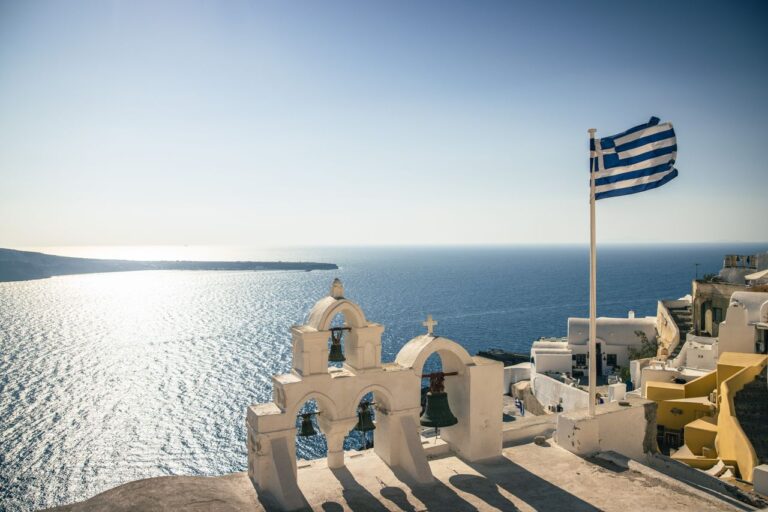
Greece combines ancient history with beautiful islands, Mediterranean food and a slower pace of travel.
Athens is the obvious starting point for first time visitors. From there, you can explore destinations such as Crete, Rhodes, Santorini or the Greek mainland.
Crete is particularly appealing if you want more than beaches. It combines historic towns, archaeological sites, villages, food and coastal scenery.
Santorini is spectacular, but its steep streets and stairs mean it will not suit everyone equally.
For a more detailed breakdown, read our guide to the best places to visit in Greece for over 60s.
Still deciding between two of Europes biggest destinations? We have also compared Greece vs Italy.
Best places to visit in Greece
Athens
Crete
Rhodes
Santorini
Meteora
Nafplio
Who will love Greece?
Greece suits travellers who want history and sightseeing mixed with slower days beside the water.
Our verdict: One of our favourite choices for combining sightseeing with relaxation.
3. Portugal
Best for a relaxed European holiday
Portugal has become one of Europes most popular destinations, and it is easy to understand why.
Lisbon combines historic neighbourhoods, restaurants, viewpoints and easy access to nearby destinations such as Sintra.
Porto offers a different experience in the north, with its riverside setting, historic centre and famous connection to port wine.
For a slower holiday, consider adding the Algarve.
Its coastal towns and beaches make it a good place to spend several quieter days after exploring Lisbon or Porto.
One thing to remember is that parts of Lisbon and Porto are hilly. If walking long distances or steep streets is difficult, choose your accommodation location carefully.
Best places to visit in Portugal
Lisbon
Porto
Sintra
The Algarve
Madeira
Who will love Portugal?
Portugal is a strong choice if you want food, history and coastal scenery without trying to pack too much into each day.
Our verdict: Excellent for a slower European holiday.
4. France
Best for culture, food and countryside
France offers much more than Paris.
Paris deserves several days if it is your first visit. Museums, historic buildings, neighbourhood cafes and famous landmarks can easily fill an itinerary.
But some of the best experiences in France happen outside the capital.
Provence offers villages, markets and countryside. Normandy combines coastal scenery with important historical sites. Bordeaux and Burgundy appeal to travellers interested in food and wine.
The French Riviera provides a completely different experience again.
Rather than trying to cross the entire country, consider pairing Paris with one other region.
Best places to visit in France
Paris
Provence
Normandy
Bordeaux
French Riviera
Loire Valley
Who will love France?
France suits travellers interested in food, art, history and spending time exploring individual regions.
Our verdict: Best when you slow down and explore beyond Paris.
5. Spain
Best for food, culture and warmer weather
Spain works particularly well for travellers who want plenty to see without spending their entire holiday moving between countries.
Barcelona offers architecture, food and Mediterranean atmosphere.
Madrid is better for museums, grand streets and day trips into central Spain.
Further south, Seville, Granada and Córdoba offer a very different side of the country.
Spain also has plenty of coastal destinations if you want to finish your trip with several slower days.
Best places to visit in Spain
Barcelona
Madrid
Seville
Granada
Valencia
Mallorca
Who will love Spain?
Spain is a great choice if you enjoy food, architecture, history and warm evenings.
Our verdict: A brilliant destination for combining cities with a slower coastal stay.
6. Croatia
Best for coastline and historic towns
Croatia is a strong option if coastal scenery is one of your priorities.
Dubrovnik is the countrys most famous destination, with its historic walls and position beside the Adriatic.
Split provides another good base and can be combined with nearby islands or coastal towns.
Croatia can become extremely busy during the European summer. Travelling outside the busiest weeks can make sightseeing considerably more enjoyable.
Some historic areas also have steep streets, stairs and uneven surfaces, so check your accommodation location before booking.
Best places to visit in Croatia
Dubrovnik
Split
Hvar
Korčula
Zagreb
Who will love Croatia?
Croatia suits travellers looking for historic towns and beautiful coastal scenery.
Our verdict: A great alternative to the better known Mediterranean destinations.
7. Scotland
Best for scenery and history
Scotland is completely different from southern Europe.
Edinburgh is one of Europes most atmospheric cities, with historic streets, museums and its famous castle.
Outside the capital, the Scottish Highlands provide spectacular landscapes, lochs, castles and small towns.
A road trip can be rewarding, but you do not need to drive yourself. Rail journeys and organised tours can make exploring easier.
The weather can change quickly, even during the warmer months, so pack accordingly.
Best places to visit in Scotland
Edinburgh
Scottish Highlands
Isle of Skye
Glasgow
Loch Lomond
Who will love Scotland?
Scotland is ideal for travellers who value history, landscapes and scenic journeys more than warm weather.
Our verdict: One of Europes best destinations for scenery.
8. Switzerland
Best for mountains and scenic rail journeys
Switzerland is expensive, but the scenery is difficult to match.
Its excellent rail network also makes it possible to see spectacular landscapes without hiring a car.
Lucerne is a good introduction to Switzerland, combining a beautiful lake with easy access to surrounding mountains.
Interlaken is popular with travellers wanting to explore the Bernese Oberland, while cities such as Zurich can work as convenient arrival or departure points.
Scenic rail journeys are a major part of the experience.
Best places to visit in Switzerland
Lucerne
Interlaken
Bern
Zermatt
Zurich
Who will love Switzerland?
Switzerland is ideal if mountain scenery and train travel are more important than travelling on a tight budget.
Our verdict: Expensive, but exceptional for scenery.
9. The Netherlands
Best for an easy city break
Amsterdam is compact enough to work well as part of a larger European trip.
The city offers canals, museums, historic streets and excellent public transport.
You can also use Amsterdam as a base for day trips rather than changing accommodation every few days.
Popular options include Haarlem, Utrecht and the Dutch countryside.
Be aware of bicycles when walking around Amsterdam. Cycle lanes are everywhere and can be easy to wander into if you are not paying attention.
Who will love the Netherlands?
The Netherlands works well for travellers wanting an interesting but relatively compact stop during a larger European holiday.
Our verdict: Excellent for three or four days between longer destinations.
10. Belgium
Best for history and compact cities
Belgium is easy to overlook when planning Europe, but it works particularly well as part of a longer itinerary.
Bruges is the standout for many visitors.
Its canals, historic buildings and compact centre make it a good place to explore slowly.
Brussels offers museums, restaurants and impressive architecture, while Ghent is another excellent historic city.
Belgiums location also makes it relatively easy to combine with France or the Netherlands.
Who will love Belgium?
Belgium suits travellers who enjoy historic cities, food and shorter stays.
Our verdict: A worthwhile addition to a longer European itinerary.
Which European Country Should You Visit First?
If this is your first trip to Europe, we would start with Italy, Greece, Portugal, France or Spain.
They offer enough variety to fill an entire holiday without requiring you to visit five countries in two weeks.
Choose Italy for the best all round mix of food, history and famous sights.
Choose Greece for history combined with islands and relaxation.
Choose Portugal for a slower holiday.
Choose France for food, art and regional variety.
Choose Spain for culture, food and warmer weather.
There is no need to see all of Europe at once.
How Long Should You Spend in Europe?
For Australians, the flight is long enough that a very short European trip rarely makes sense.
Around three weeks gives you enough time to see several destinations without moving constantly.
For example:
Week 1: Italy
Week 2: Greece
Week 3: Portugal
Another option is to spend the entire trip exploring one or two countries in greater depth.
That can be considerably less tiring than packing your bags every second day.
The Biggest Mistake Australians Make in Europe
Trying to do too much.
Paris on Monday, Amsterdam on Wednesday, Rome on Friday and Athens by Sunday might look impressive on an itinerary.
It is much less enjoyable when you are actually doing it.
Every change of destination means packing, checking out, travelling to an airport or station, waiting, arriving, finding your accommodation and unpacking again.
Slower travel gives you more time to actually experience each place.
Two or three well chosen destinations can make a better holiday than racing through eight.
Getting Around Europe
One of Europes biggest advantages is the variety of transport options.
Trains are excellent for many journeys between major cities.
Flying can make more sense for longer distances, particularly when travelling between different parts of Europe.
Local buses, trams and metro systems are useful within cities.
Taxis and ride services can also be worthwhile when carrying luggage or when your accommodation is not close to public transport.
Do not automatically choose the cheapest option.
Sometimes paying slightly more for a direct train or conveniently located hotel can save hours of unnecessary travel.
Flying to Europe From Australia
The journey from Australia to Europe is significant, so plan the first few days accordingly.
Avoid building an ambitious sightseeing schedule for the day you arrive.
Give yourself time to sleep, adjust to the time difference and recover from the flight.
Our guide to flying long haul covers practical ways to make the journey more comfortable.
You can also read our complete guide on how to travel overseas after 60 without the stress.
What to Pack for Europe
Packing light becomes especially valuable when travelling between several European destinations.
Packing Cubes
Packing cubes make it easier to organise your suitcase when changing hotels.
Travel Neck Pillow
A comfortable neck pillow can make the long flight from Australia easier.
See our travel neck pillow pick on Amazon
Power Bank
Your phone may be used constantly for maps, bookings, photos and transport information.
A portable power bank gives you a backup when you are away from your hotel all day.
See our power bank pick on Amazon
Travel Document Organiser
Keeping your passport, travel documents and other important paperwork together can make airports and border crossings less stressful.
See our travel document organiser pick on Amazon
Travel Insurance for Europe
Travel insurance deserves serious consideration when travelling internationally.
Read the policy carefully rather than choosing purely on price.
Pay particular attention to medical cover, existing medical conditions, cancellation cover, exclusions and any activities you plan to do.
We have a separate guide covering travel insurance for Australians over 60.
Staying Healthy While Travelling
Long flights, different food, hot weather and busy sightseeing days can take some adjustment.
Allow rest days throughout your itinerary and do not feel pressured to fill every hour.
Comfortable footwear is particularly important in Europe because many historic areas have cobblestones, hills and uneven surfaces.
You can read our guide to staying healthy while travelling after 60 before you leave.
Entry Requirements for Australians Visiting Europe
European entry rules can change, so always check the official requirements for every country on your itinerary before travelling.
Many popular European destinations are part of the Schengen Area, where short stay rules apply across participating countries rather than resetting each time you cross an internal border.
Europe has also introduced the Entry/Exit System, known as EES, for eligible non EU travellers entering participating European countries.
ETIAS is a separate travel authorisation system planned by the European Union. Travellers should check its official status before departure rather than relying on older travel articles or social media posts.
Before travelling, check current advice and entry requirements through Australian Government Smartraveller and the official European Union travel information websites.
Accessibility in Europe
Accessibility varies enormously between countries, cities and individual attractions.
Modern hotels and transport systems can be excellent, while historic centres may have cobblestones, stairs, steep streets and older buildings without lifts.
If mobility is a concern, accommodation location becomes particularly important.
Before booking, check:
Whether the hotel has a lift
Whether your room can be reached without stairs
Shower and bathroom accessibility
Distance to public transport
Terrain around the hotel
Accessibility at the attractions you most want to visit
Contact the hotel directly if the information online is unclear.
Best Time to Visit Europe
For many travellers over 60, the months immediately before and after the peak European summer can be particularly appealing.
May, June, September and early October can offer a good balance between weather and sightseeing.
July and August can be extremely busy and hot in popular destinations, particularly around southern Europe.
Winter can be excellent for museums, food and Christmas markets, but daylight hours are shorter and the weather can limit some activities.
The best time ultimately depends on where you are going.
Our Favourite European Destinations for Over 60s
If we had to narrow this entire list to five destinations, we would choose:
Italy for the best overall experience.
Greece for history and island relaxation.
Portugal for slower travel.
France for food, art and culture.
Spain for warmth, food and variety.
But the most important advice is simpler than choosing a particular country.
Do less and enjoy more.
Europe rewards travellers who give themselves time to sit in a cafe, explore a neighbourhood, spend an afternoon in a museum or simply enjoy where they are.
You have travelled a long way from Australia.
There is no reason to rush through it.