How to Attract Birds to Your Australian Garden
There is something special about looking out the window and seeing native birds using your garden.
And you do not need an enormous property to encourage them.
A suburban backyard, courtyard or even a balcony with a few well chosen plants and a safe source of water can provide useful resources for local birds.
The key is to stop thinking about attracting birds with food and start thinking about creating habitat.
BirdLife Australia recommends gardens that provide food, shelter, water and nesting opportunities, with locally native plants playing an important role.
Here is how to make your garden more inviting to Australian birds.
1. Start With the Birds Already Visiting
Before buying plants, spend some time watching your garden.
Which birds already visit?
Where do they land?
What plants do they use?
Are they feeding, drinking or simply passing through?
You may already have useful habitat without realising it.
BirdLife Australia recommends taking stock of existing vegetation before removing anything, then adding resources that are currently missing.
You do not need to completely redesign the backyard.
The goal is to gradually make it better.
2. Grow Locally Native Plants
One of the best things you can do is introduce plants native to your local area.
Local native plants are adapted to local conditions and can provide food and shelter suited to local bird species. BirdLife Australia recommends locally native plants where possible, with broader Australian natives as another option when local species are unavailable.
That distinction matters.
Australia is enormous.
A plant native to Western Australia is still Australian, but that does not automatically make it the best plant for a garden in coastal Queensland.
Your local native nursery or council plant guide can be extremely useful.
If you want ideas before visiting a nursery, read our guide to the best native plants for Australian gardens.
3. Create Different Layers
A bird friendly garden should not necessarily look like a row of identical shrubs surrounded by lawn.
Different birds use different parts of vegetation.
BirdLife Australia recommends creating layers that can include groundcovers and grasses, small shrubs, taller shrubs and trees where space allows. More structurally diverse gardens can provide more places for birds to forage and shelter.
Think vertically.
Ground level
Native grasses, groundcovers, leaf litter and mulch.
Lower level
Small and dense shrubs.
Middle level
Larger shrubs and small trees.
Upper level
Larger trees where your property has enough room.
You do not need every layer in a small garden.
Just adding more variety can help.
4. Do Not Forget Dense Shrubs
Big flowering plants might be the obvious choice when creating a bird garden, but shelter matters too.
Dense shrubs can give smaller birds somewhere to retreat from predators and larger aggressive birds.
BirdLife specifically recommends dense vegetation for smaller species and notes that gardens dominated by tall trees and open lawn tend to favour common and sometimes aggressive birds.
So resist the temptation to make every part of the garden perfectly open and tidy.
A little complexity is useful.
5. Provide Different Natural Food Sources
Different birds eat different things.
Some feed on nectar.
Others eat seeds.
Some eat fruit.
Many depend heavily on insects.
A diverse garden therefore has a better chance of providing useful food throughout the year.
BirdLife Australia suggests selecting plants that flower, fruit or produce seed at different times rather than creating one enormous flowering period followed by months with very little available.
Examples they identify include:
Nectar
Banksias, Grevilleas, Hakeas, Melaleucas and Correas.
Seeds
Native grasses, Wattles, Lomandra and Tea Trees.
Fruit
Plants such as Lilly Pilly and other suitable native fruiting species.
Insects
Wattles, Tea Trees, Kunzea and other plants can support insects that birds feed on. Mulch and leaf litter can also create habitat for invertebrates.
The exact plants you choose should still suit your location, climate and available space.
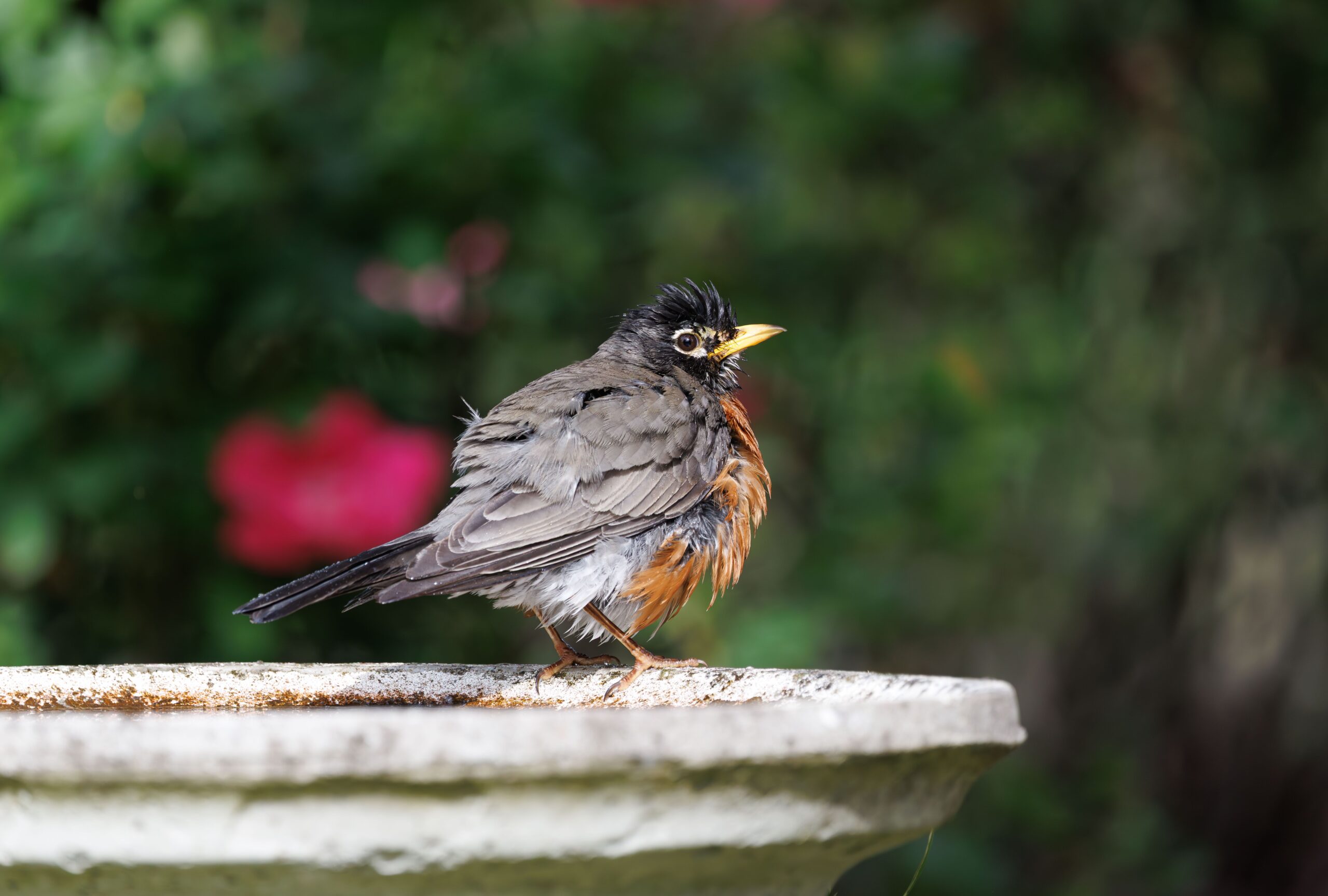
6. Add a Bird Bath
This may be one of the simplest changes you can make.
Birds need water for drinking and bathing, particularly during hot weather.
And you do not need an expensive ornamental bird bath.
BirdLife Australia says containers, hanging pots, ceramic dishes and other suitable household items can work. Metal containers are best avoided because they can become hot.
Placement matters.
Put the water somewhere shaded and relatively close to vegetation so birds have somewhere to retreat if they feel threatened.
If the container is deep or slippery, add a rock, branch or similar perch that provides a way out.
Most importantly, maintain it.
BirdLife recommends replacing the water daily and cleaning the container regularly to reduce disease risk and mosquito breeding.
A filthy bird bath is not helping the birds.
7. Keep Cats Away From Bird Areas
If you have a cat, this part matters.
Bird baths and feeding areas can bring birds down into predictable locations.
BirdLife Australia recommends keeping pets away from water sources and identifies domestic cats as a significant threat to Australian native birds.
Keeping cats contained also protects other wildlife.
If you provide a bird bath, position it where birds have good visibility and nearby escape cover without creating an easy ambush point for pets.
8. Reduce Chemical Use Where Practical
An insect free garden is not necessarily a bird friendly garden.
Insects are an important food source for many birds.
BirdLife Australia recommends limiting garden sprays and chemicals unless they are genuinely necessary, while the Australian Museum similarly recommends wildlife friendly pest management in gardens designed to support native animals.
That does not mean ignoring serious garden pests.
It means thinking about whether treatment is actually required and using an appropriate targeted approach rather than routinely spraying everything.
Always follow product labels and local guidance when using garden chemicals.
9. Leave Some Natural Material Behind
A perfectly spotless garden may look neat, but wildlife often benefits from some of the material gardeners traditionally remove.
Leaves.
Seeds.
Mulch.
Branches.
Organic material.
BirdLife recommends retaining some leaf fall and garden material because it can increase available food and support insect life.
You do not need to let the entire backyard become overgrown.
A mulched garden bed beneath shrubs can provide habitat while still looking intentional.
10. Think Before Removing Mature Trees
A mature tree can provide something a newly planted garden simply cannot replace overnight.
Large trees can offer perches, shelter and, in some cases, hollows used by wildlife.
BirdLife recommends protecting hollow bearing trees where possible as part of creating better urban habitat for birds.
Obviously, dangerous or unhealthy trees may require professional assessment or removal.
But do not remove a mature tree simply because you assume planting a few small natives will immediately replace its habitat value.
11. Be Careful With Nest Boxes
Nest boxes can be useful in some situations, particularly where natural hollows are scarce.
But hanging any random wooden box from a tree is not automatically beneficial.
Different species have different requirements, and nest boxes need appropriate construction, placement and ongoing monitoring.
If you are considering one, identify the birds in your area first and follow guidance designed for the species you are hoping to support.
BirdLife includes nest boxes as one component of habitat gardening rather than treating them as a substitute for vegetation and natural habitat.
Build the garden first.
Then consider whether a nest box adds something useful.
12. Do Not Assume Bigger Flowers Mean More Birds
This is an interesting one.
Huge flowering Grevilleas might seem perfect for attracting birds.
They certainly can attract birds.
But they may not attract the birds you were hoping for.
BirdLife notes that some large flowering plants can favour large, aggressive honeyeaters such as Noisy Miners and Red Wattlebirds, which can chase smaller birds away.
If you want greater bird diversity, particularly smaller birds, include dense vegetation and plants with smaller flowers as part of the mix.
Again, diversity beats planting twenty copies of the same thing.
13. Reduce Unused Lawn
You do not need to destroy the lawn.
But ask yourself how much of it you actually use.
Open lawns generally provide fewer resources than diverse planted areas.
BirdLife recommends converting unused lawn into garden beds or native grasses where appropriate.
That can have another advantage.
Less lawn can mean less mowing, edging and watering.
If reducing garden maintenance appeals to you, read our complete guide to low maintenance gardening for seniors.
14. Make Changes Gradually
You do not need to spend thousands of dollars transforming the entire garden this weekend.
Start with one section.
Add a safe water source.
Plant a few locally appropriate shrubs.
Replace an unused patch of lawn.
Add native grasses.
Allow some leaf litter beneath established plants.
Then watch what happens.
BirdLife actually recommends building on the vegetation already present rather than automatically removing everything and starting again.
A bird friendly garden can develop over years.
That is part of the enjoyment.
A Simple Bird Friendly Garden
If you want to keep things straightforward, concentrate on four things:
Water
Provide clean, shaded water and maintain it properly.
Food
Grow a variety of suitable plants that provide nectar, seeds, fruit and support insects at different times.
Shelter
Include dense shrubs and different vegetation heights.
Safety
Control pets, minimise unnecessary chemical use and give birds somewhere to retreat.
Those four principles will do far more than buying a decorative feeder and hoping lorikeets appear.
Make the Garden Easy to Maintain
Creating habitat does not mean creating endless garden work.
Choosing plants suited to your conditions is important.
So is designing the garden around what you can comfortably maintain.
Mulch can help with moisture and weeds.
Irrigation can reduce manual watering.
Raised beds can make other parts of the garden easier to access.
Better tools can reduce some of the physical effort involved.
For practical equipment and setup ideas, read our gardening tools for seniors guide.
The Bottom Line
Attracting birds to your Australian garden is really about creating somewhere they can use.
Not just somewhere they can visit for five minutes.
Provide suitable plants.
Create layers.
Include dense shelter.
Keep fresh water available.
Support insects and natural food sources.
Keep pets away from vulnerable birds.
And give the garden time to develop.
You may eventually find yourself recognising the regular visitors.
Then noticing when they bring juveniles.
Then wondering why the same magpie appears to know exactly when you walk outside.
That is when a garden starts becoming more than a collection of plants.
It becomes habitat.