The Best Gardening Tools for Seniors: A Complete Guide
Gardening is one of the best ways to spend time outdoors, stay active and enjoy your home after retirement.
But gardening can also involve plenty of bending, kneeling, reaching, lifting and repetitive work.
The right equipment can make those jobs easier.
You do not need a shed full of expensive gadgets. A few well chosen tools can reduce unnecessary effort and make gardening more comfortable and enjoyable.
Here are the gardening tools we think are most worth considering for older gardeners.
As an Amazon Associate I earn from qualifying purchases.
1. Garden Kneeler With Handles
Getting down to garden level is often easy.
Getting back up can be the difficult part.
A garden kneeler with handles gives you a padded surface for kneeling and sturdy handles to hold when lowering or raising yourself.
Many designs can also be flipped over and used as a small garden seat.
This can be particularly useful for jobs such as weeding, planting and tending garden beds.
Garden kneeler with handles:
2. Ergonomic Hand Tools
If you spend a lot of time planting, digging or weeding, the shape and weight of your hand tools matter.
Look for tools that feel comfortable in your hand and are not unnecessarily heavy.
An ergonomic gardening set can include commonly used tools such as a hand trowel, cultivator and weeding tools.
The important thing is not how many tools come in the set.
Choose tools you will actually use.
Ergonomic gardening tools:
3. Raised Garden Beds
Sometimes the best gardening tool is not really a tool at all.
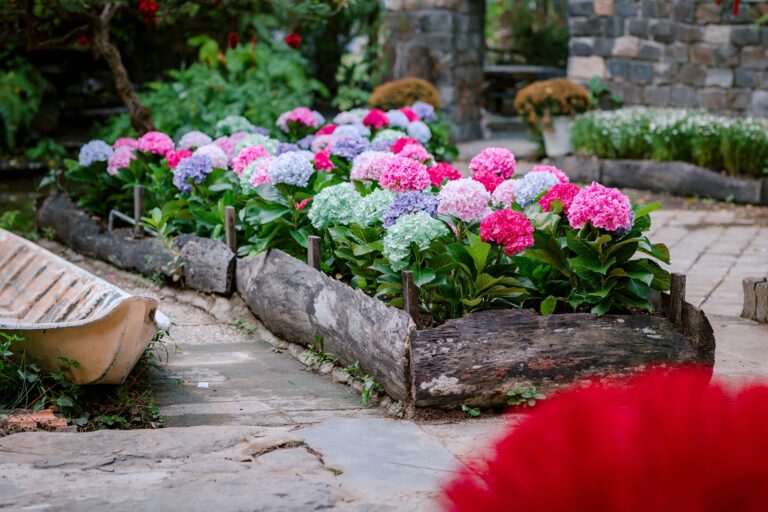
Raised garden beds can bring plants to a more convenient working height and reduce how much time you spend working directly at ground level.
They can work particularly well for herbs, vegetables and smaller flowering plants.
Before buying one, think about where it will sit, how much sunlight the area receives and whether you can comfortably reach the centre of the bed.
Raised garden bed:
If making the entire garden easier to maintain is the bigger goal, we have a separate guide covering practical ways to reduce garden work:
4. Soaker Hose or Drip Irrigation
Dragging a heavy garden hose around every few days gets old quickly.
A simple irrigation setup can reduce the amount of manual watering required and make maintaining larger garden beds considerably easier.
Soaker hoses and drip irrigation can deliver water directly around your plants rather than requiring you to stand outside watering everything by hand.
Depending on your garden, adding a timer can make the system even more convenient.
Soaker hose and irrigation option:
Always follow local water restrictions and adjust watering to your plants, climate and weather conditions.
5. Self Watering Planters
Self watering planters can be useful for balconies, patios and smaller gardens.
They contain a reservoir that allows plants to draw on stored water rather than relying entirely on frequent surface watering.
They do not eliminate plant care, and you still need to monitor the soil and water level, but they can make container gardening more convenient.
Self watering planter:
6. Vertical Garden Planters
If bending is something you would rather minimise, growing upwards can be a clever alternative.
Vertical planters allow multiple plants to grow in a relatively small footprint.
They can work particularly well for herbs, strawberries, flowers and some smaller vegetables.
They are also useful for retirees living in units or homes with limited outdoor space.
Make sure the planter is positioned securely and consider how heavy it will become once filled with soil and watered.
Vertical garden planter:
7. Lightweight Garden Cart
Moving bags of soil, mulch, pots and gardening equipment around the yard can involve far more lifting than the actual gardening.
A garden cart lets you move several items at once rather than repeatedly carrying them across the yard.
When choosing one, consider the weight of the cart itself.
A huge heavy duty cart may be unnecessary for a smaller suburban garden. Look for something that is easy for you to manoeuvre and appropriate for the jobs you actually do.
Lightweight garden cart:
8. Battery Pruning Shears
Traditional secateurs work perfectly well for many gardeners.
But if you regularly prune a large number of plants, battery powered pruning shears are another option worth knowing about.
They use a powered cutting mechanism rather than relying entirely on hand pressure for each cut.
They are not necessary for everyone, and powered cutting tools need to be handled carefully.
Follow the manufacturers instructions, keep your hands away from the cutting mechanism and store them safely when not in use.
Battery pruning shears:
Which Gardening Tools Are Actually Worth Buying?
You do not need everything on this list.
Start with the jobs that currently make gardening less enjoyable.
If getting down to ground level is difficult, consider a raised garden bed or garden kneeler.
If watering takes too much time, irrigation may make the biggest difference.
If you are constantly carrying equipment around the yard, a garden cart may be more useful than buying another set of hand tools.
If you have very little space, self watering pots or a vertical garden may make more sense than a large raised bed.
Buy equipment to solve an actual problem rather than filling the shed with tools you rarely use.
Make the Garden Easier Too
Good tools help, but the design of the garden itself can make an even bigger difference.
Consider reducing areas that require constant maintenance, choosing plants suited to your local climate, using mulch to help manage weeds and moisture, and placing frequently used plants where they are easy to reach.
Raised beds, containers and automatic watering can also reduce some of the repetitive work involved in maintaining a garden.
For more ideas, read:
15 Low Maintenance Garden Ideas for Seniors in Australia
Starting a Vegetable Garden?
Many of the same principles apply when growing your own food.
Start small rather than creating an enormous vegetable garden that becomes another job. A raised bed or several containers can provide plenty of room for herbs and vegetables while keeping things manageable.
If you are just getting started, our complete beginner guide covers choosing your garden setup, what to plant, soil, watering, seasonal planting and your first month in the garden.
A Few Things to Consider Before Buying
The best gardening tool is not necessarily the one with the most features.
Think about:
Weight: Can you comfortably lift and control it?
Grip: Does it feel comfortable in your hand?
Storage: Where will you keep it?
Maintenance: Does it require charging, sharpening or regular servicing?
Actual usefulness: What specific gardening job will it make easier?
If possible, handle tools before buying. What feels comfortable for one person may not suit another.
Gardening Safely
Gardening can involve heat, sun exposure, uneven surfaces, sharp equipment and physical work.
Wear appropriate footwear and sun protection, keep paths clear and take extra care with powered or sharp tools.
Avoid trying to lift or move something that is beyond what you can comfortably manage.
If you have health or mobility concerns that affect what activities are appropriate for you, seek individual advice from an appropriate health professional.
Our Top Three Places to Start
If you are trying to make an existing garden easier rather than buying everything at once, I would start with the problem causing you the most work.
For working closer to the ground:
Garden kneeler with handles
For reducing manual watering:
Soaker hose and irrigation
For reducing bending:
Raised garden bed
Those three changes address some of the most repetitive jobs involved in maintaining a garden without requiring a complete garden redesign.
Final Thoughts
Gardening after 60 does not need to mean giving up the garden you love.
Sometimes a few practical changes are enough to make a significant difference.
Bring plants to a more convenient height.
Automate some of the watering.
Move heavy supplies with a cart.
Choose lighter, more comfortable tools.
And focus on creating a garden that is enjoyable to maintain rather than one that constantly demands your attention.
The goal is not to own more gardening equipment.
It is to spend less time struggling with the garden and more time enjoying it.