The Best Native Plants for Australian Gardens
Australian native plants can be a fantastic choice if you want a beautiful garden that is easier to maintain and supports local wildlife.
But there is an important catch.
There is no single list of native plants that will suit every Australian garden.
A plant that thrives in subtropical Queensland may struggle through a cold Victorian winter. Something that loves the conditions around Perth may not enjoy the humidity of coastal Queensland.
The key is choosing native plants that suit your climate, soil, available space and the amount of gardening you actually want to do.
In this guide, we cover some of the best native plants to consider for Australian gardens, including ground covers, flowering shrubs, screening plants, grasses and small trees.
We will also look at options for attracting birds, filling shady areas, dealing with dry conditions and creating a garden that does not require constant attention.
Important: Growing requirements can vary significantly between species and cultivars. Always check the mature size and requirements of the particular plant you are buying. A good local native nursery can also help you choose plants suited to your area.
Why Choose Australian Native Plants?
There are thousands of Australian native plant species, giving gardeners an enormous range of colours, shapes and sizes to work with.
Choosing plants suited to your local conditions can also make maintaining the garden easier.
Depending on the species, native plants can offer advantages such as:
Less watering once established
Some native plants are well adapted to periods of dry weather, although newly planted natives generally still require appropriate watering while becoming established.
Wildlife habitat
Native flowers, seeds and foliage can provide food and shelter for birds, insects and other wildlife.
Plenty of variety
There are native plants suitable for everything from pots and small suburban gardens to screening hedges and larger properties.
Beautiful flowers
Grevilleas, bottlebrushes, kangaroo paws and many other Australian plants can provide spectacular colour.
Options for difficult areas
There are native plants suited to coastal conditions, dry areas, shade and other challenging parts of the garden.
The important part is matching the plant to the location rather than assuming that every Australian native will thrive anywhere in Australia.
If making your garden easier to manage is your main goal, also read our guide to low maintenance gardening:
Native Ground Covers
Ground covers can help fill gaps between larger plants and create interest closer to ground level.
They can be particularly useful when you want to cover an area without filling it with larger shrubs.
1. Native Violet
Native Violet is a creeping Australian ground cover with small green leaves and delicate purple and white flowers.
It can be a useful choice for sheltered or partly shaded areas where conditions suit it.
Good for: Ground cover, shaded areas and spaces between larger plants
Flowers: Small purple and white flowers
Maintenance: Generally manageable once established in suitable conditions
Before planting: Check whether your particular garden provides the moisture and shade conditions it prefers.
2. Brachyscome
Often known as native daisies, Brachyscome species and cultivars can add masses of small daisy like flowers to the garden.
They work well along borders, around garden beds and in pots.
Good for: Borders, pots and smaller gardens
Flowers: Often purple, mauve, pink or white depending on the variety
Size: Generally compact, although this varies between species and cultivars
Why consider it: An easy way to introduce colour without adding a large plant.
3. Pigface
Pigface is a succulent ground cover recognised for its fleshy leaves and colourful flowers.
Some species are naturally found in coastal environments, making appropriate varieties worth considering for exposed gardens.
Good for: Ground cover, sunny positions and some coastal gardens
Flowers: Bright pink, purple and other colours depending on the species
Maintenance: Can be relatively straightforward in appropriate conditions
Because different plants are commonly sold under the name Pigface, check the particular species before planting.
Native Shrubs
Shrubs are where Australian native gardens really start to become interesting.
They can provide flowers, screening, structure and habitat without necessarily requiring the space of a large tree.
4. Grevillea
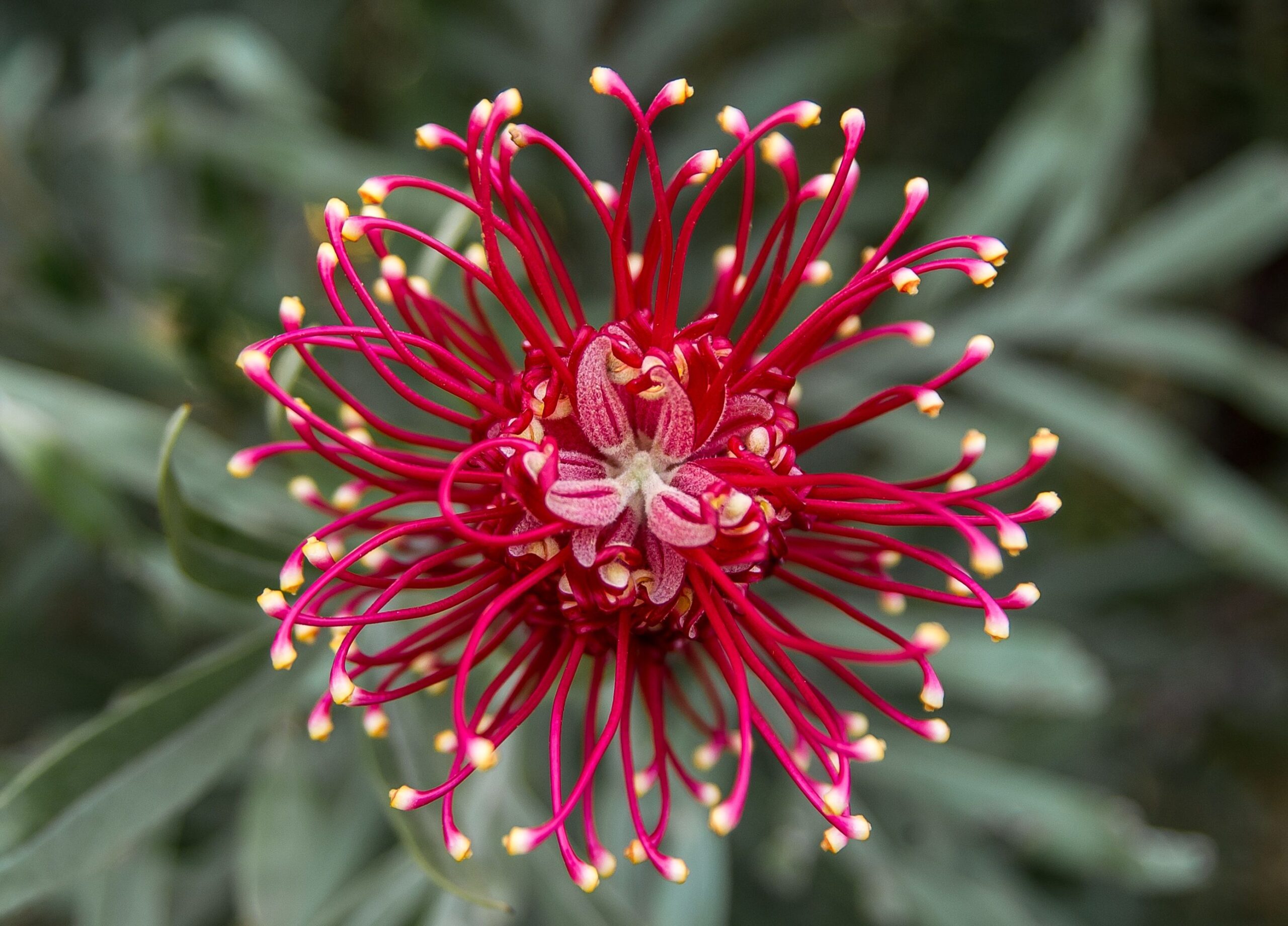
Grevilleas are among the most recognisable Australian garden plants.
There is an enormous range available, from compact plants suitable for smaller gardens to much larger shrubs.
Their distinctive flowers can also provide a nectar source for birds.
Good for: Flowering gardens, screening and wildlife friendly gardens
Position: Depends on the particular variety
Size: Varies enormously
Wildlife: Flowers can attract nectar feeding birds and insects
Always check the mature dimensions before buying. A compact grevillea and a large screening grevillea can require very different amounts of space.
5. Bottlebrush
Bottlebrushes are famous for their brush shaped flowers and are widely grown in Australian gardens.
Depending on the species and cultivar, they can range from relatively compact shrubs to much larger plants.
Good for: Colour, screening and wildlife friendly gardens
Flowers: Commonly red, although other colours are available
Wildlife: Flowers can attract nectar feeding birds and insects
Maintenance: Depends on the variety and growing conditions
Bottlebrush can be a particularly good option when you want an Australian plant that provides both visual impact and habitat value.
6. Westringia
Westringia is sometimes called Coastal Rosemary because of the appearance of its foliage, although it is not culinary rosemary.
It is commonly used for hedging and structured garden beds.
Good for: Hedges, borders and structured gardens
Flowers: Small pale flowers
Foliage: Dense and attractive
Why consider it: Useful if you prefer a neat garden rather than a more informal native garden.
Some varieties can also be clipped into shape, although that obviously adds more maintenance.
7. Kangaroo Paw
Kangaroo Paw is one of Australia’s most distinctive flowering plants.
The unusual flowers rise above the foliage and can create a striking feature in a garden.
Good for: Feature planting, colour and native garden beds
Flowers: Available in a range of colours depending on the variety
Position: Many varieties prefer plenty of light and suitable drainage
Maintenance: Old flower stems and foliage may need occasional removal
Kangaroo Paw is a great example of why native does not necessarily mean zero maintenance. It can be spectacular, but it still needs appropriate conditions and care.
8. Leptospermum
Leptospermum includes plants commonly known as tea trees.
Different species and cultivars vary considerably in size and growing requirements.
Their small flowers can provide an attractive display when the plant is in bloom.
Good for: Shrub borders, flowering gardens and some screening situations
Flowers: Often white or pink depending on the variety
Size: Highly variable
Check the exact plant before buying rather than choosing based on the common name alone.
Native Trees and Larger Plants
A tree can completely change the feel of a garden, but this is where checking mature size becomes especially important.
Do not choose a tree based purely on how it looks in a small nursery pot.
Consider its eventual height and width, root space and proximity to buildings, paths and services.
9. Lilly Pilly
Lilly Pilly is widely used in Australian gardens, particularly for hedges and screening.
There are numerous species and cultivars available in different sizes.
Good for: Screening, hedges and larger garden beds
Foliage: Often dense, with attractive new growth on some varieties
Size: Varies significantly
Maintenance: Hedged plants require pruning if you want to maintain a formal shape
If low maintenance is the priority, consider the mature size carefully so you are not constantly pruning a plant that wants to become much larger.
10. Banksia
Banksias are unmistakably Australian.
Their distinctive flower spikes and seed cones give them character, while their flowers can also provide food for wildlife.
Good for: Wildlife friendly gardens and feature planting
Flowers: Distinctive cylindrical or rounded flower spikes depending on the species
Wildlife: Can provide food for birds and insects
Size: Ranges from low growing forms to trees
Choose a Banksia suited to your local soil and climate rather than assuming every species will perform equally well.
11. Wattle
Acacias, commonly known as wattles, are found throughout Australia.
Their yellow flowers can produce an impressive display, but the enormous diversity within the Acacia genus means size, lifespan and growing requirements vary substantially.
Good for: Native gardens and seasonal colour
Flowers: Commonly yellow
Size: Depends heavily on the species
A locally appropriate species is often the best place to start.
12. Paperbark
Paperbarks are members of the Melaleuca genus and are recognised for their distinctive bark.
Depending on the species, they can range considerably in size.
Good for: Larger gardens and native landscapes
Feature: Distinctive papery bark
Wildlife: Flowers can provide resources for native wildlife
Because some Melaleucas become substantial trees, check the mature size carefully before planting one near your home.
Native Grasses and Grass Like Plants
Native grasses and grass like plants can be excellent for filling garden beds, creating borders and adding movement without relying entirely on flowering shrubs.
13. Lomandra
Lomandra is widely used in Australian landscaping.
Its strappy foliage can work well along paths, in mass plantings and around larger shrubs.
Good for: Borders, mass planting and structured gardens
Appearance: Dense strappy foliage
Size: Depends on the cultivar
Maintenance: Generally manageable, although old or damaged foliage may occasionally need attention
Compact cultivars can be particularly useful where space is limited.
14. Kangaroo Grass
Kangaroo Grass is an Australian native grass found across large parts of the country.
It can provide a softer and more natural appearance than a highly structured garden bed.
Good for: Natural style gardens and native landscapes
Appearance: Fine grassy foliage with distinctive seed heads
Why consider it: Useful if you want your garden to have a more natural Australian character.
Again, check whether it suits your local conditions before planting.
Choosing Native Plants for Your Garden
Instead of asking only, “What are the best Australian native plants?”, it can be more useful to ask:
What do I need this plant to do?
Here are some starting points.
For Small Gardens and Pots
Look for compact cultivars of plants such as:
Brachyscome
Compact Grevilleas
Compact Westringia
Kangaroo Paw
Small Lomandra cultivars
Always check the mature size rather than relying on how small the plant looks when you buy it.
For Attracting Birds
Consider flowering natives that provide nectar, seeds or habitat.
Depending on your location, suitable options may include:
Grevilleas
Bottlebrushes
Banksias
Melaleucas
A garden containing different plant heights and flowering periods can provide more varied habitat than relying on a single species.
For Bees and Other Pollinators
Flowering natives can provide valuable food resources for insects.
Options can include:
Brachyscome
Grevillea
Bottlebrush
Leptospermum
Banksia
Try to include several flowering species rather than expecting one plant to support wildlife throughout the entire year.
For Coastal Gardens
Coastal conditions can involve wind, salt exposure and sandy soils.
Plants naturally adapted to coastal environments may cope better, but suitability still depends on the exact site.
Pigface and some Westringia varieties are worth investigating.
A local native nursery is particularly valuable when choosing plants for exposed coastal conditions.
For Dry Gardens
Some Australian native plants can cope well with periods of dry weather once established.
However, drought tolerance varies considerably.
Grevilleas, Banksias, Lomandra and some Acacia species may be worth considering depending on your climate and soil.
Remember that even drought tolerant plants usually require appropriate watering while establishing.
For Shady Areas
Shade does not mean you cannot grow Australian natives.
Native Violet can be useful in some sheltered shaded areas, while other suitable species will depend heavily on your region.
Check whether your garden has full shade, filtered light or only a few hours without direct sun, as these are very different conditions.
How to Make a Native Garden Easier to Maintain
Choosing the right plants is only part of creating an easier garden.
A few design decisions can make a major difference.
Choose the Right Plant Size
This is probably the most important tip in this entire guide.
If you plant a shrub that naturally wants to grow three metres tall in a space where you only want a one metre hedge, you have created years of unnecessary pruning.
Choose plants whose natural mature size suits the available space.
Group Plants With Similar Needs
Plants with similar watering and light requirements are easier to manage when they are grown together.
It also reduces the problem of trying to keep one plant wet while the plant beside it prefers drier conditions.
Use Mulch
Appropriate mulch can help retain soil moisture and reduce weed growth.
Keep mulch away from direct contact with plant stems and trunks.
Think About Watering Before Planting
Dragging a hose around the garden every few days becomes less appealing as the garden gets larger.
Planning irrigation or using a soaker hose in appropriate areas can reduce the amount of manual watering required.
Leave Enough Space
A garden can look empty when plants are young, which makes it tempting to squeeze more plants into every gap.
Remember that they grow.
Allowing appropriate spacing can reduce overcrowding and unnecessary pruning later.
A Few Tools That Can Make Gardening Easier
You do not need a shed full of equipment to grow Australian natives.
A few practical tools can make planting and maintenance more comfortable.
As an Amazon Associate I earn from qualifying purchases.
Garden Kneeler With Handles
A garden kneeler can be useful when planting, weeding or working close to ground level.
The handles can also provide something to hold when changing position.
Ergonomic Garden Tools
Comfortable hand tools are worth considering if you spend a lot of time planting, weeding or maintaining garden beds.
Lightweight Garden Cart
Moving mulch, soil, plants and tools around the yard can quickly become one of the more tiring parts of gardening.
A lightweight garden cart can reduce the amount you need to carry by hand.
Soaker Hose or Irrigation System
New plants can require regular watering while they become established.
A simple irrigation setup can reduce the amount of time spent manually watering larger garden beds.
We have a complete guide covering more useful equipment here:
What to Ask Before Buying a Native Plant
Before taking a plant home, check five things.
How big will it become?
Look at the mature height and width, not the current pot size.
How much sunlight does it need?
Full sun, partial shade and deep shade are very different environments.
What soil does it prefer?
Drainage and soil type can significantly affect whether a plant thrives.
How much water will it need?
Consider both establishment watering and its longer term requirements.
Is it suitable for my climate?
Australia covers tropical, subtropical, temperate, alpine, Mediterranean and arid climates.
“Australian native” alone does not tell you whether a plant belongs in your particular garden.
Where Should You Buy Native Plants?
A specialist native nursery can be an excellent place to start.
Staff familiar with your local area may be able to recommend plants that suit your climate, soil and garden conditions.
Local provenance plants can also be worth investigating if supporting locally native ecosystems is one of your priorities.
Take a few photos of your garden with you and know approximately how much sunlight the area receives.
That gives the nursery much more useful information than simply asking for “something low maintenance.”
Are Native Plants Really Low Maintenance?
Some can be.
But native does not automatically mean maintenance free.
A well chosen native plant growing in suitable conditions may require relatively little attention once established.
A poorly chosen native planted in the wrong position can become just as frustrating as any other garden plant.
The secret is not simply buying natives.
It is choosing the right native for the right location.
That is what creates an easier garden.
Final Thoughts
Australian native plants can create a beautiful garden filled with colour, texture and wildlife.
You can grow compact native daisies in pots, use Lomandra along pathways, plant Grevilleas and Bottlebrushes for flowers and wildlife, or introduce larger Banksias and Paperbarks where space allows.
You do not need to transform your entire garden at once.
Start with one area.
Work out how much sun it receives, consider your soil and available space, and choose a plant suited to those conditions.
Over time, you can build a garden that feels distinctly Australian without creating more work than you actually want.
And if your ultimate goal is spending more time enjoying your garden and less time maintaining it, read our complete low maintenance gardening guide next: